Meet the Models: April Goodman
Model Spotlight: April Goodman
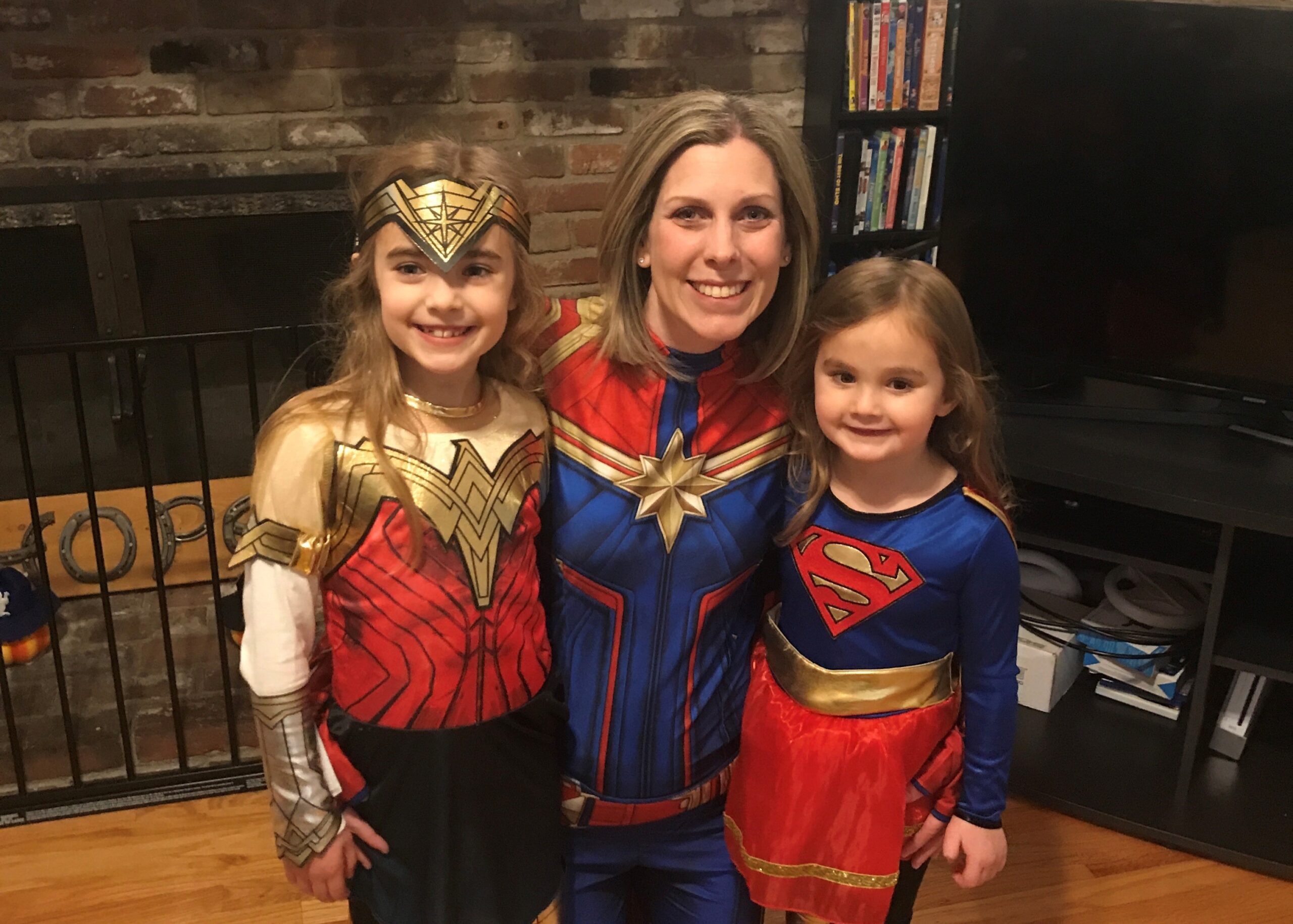
April Goodman’s journey through breast cancer began with a postponed mammogram during the early months of the COVID-19 pandemic—a delay that, had it stretched much longer, could have changed the trajectory of her life.
She was supposed to get her screening in March 2020, but like many women during that time, she waited. In September, on the same day her youngest daughter started preschool, April felt a persistent instinct: “Just go get it done.” That decision likely saved her life.
Diagnosis Without Warning
April had no lump. No symptoms. But the mammogram, ultrasound, and a prompt biopsy revealed stage 3 breast cancer that had already spread to her lymph nodes. At the time, her daughters were just six and three. Her oldest was beginning remote first grade, her youngest only starting preschool.
Despite the weight of the diagnosis, April slipped into fight mode. She continued working full-time—trading bonds as a portfolio manager at a financial firm—through chemotherapy, surgery, and six weeks of daily radiation. The pandemic, in some strange way, worked in her favor. Already working from home, she was spared the exhausting commute and given extraordinary grace from her workplace: “We got you,” her boss and coworkers said. That message carried her on the toughest days.
Wearing the Armor of Motherhood
There was no time to fall apart. April, like so many mothers, put on a suit of emotional armor to protect her family. She described sitting in the car with her husband after the initial diagnosis, taking a breath, and telling him, “We’ve got this.” Inside, she was devastated. But what kept her strong was knowing she would rather endure this herself than see her daughters or husband go through it.
Even on the hardest chemo days, when she couldn’t lift her head off the pillow or taste food, she’d respond to calls with, “Oh, I’m good, just tired.” That unrelenting need to reassure others—despite personal suffering—is one of the most quietly heroic parts of her story.
Telling Her Daughters
April and her husband navigated the heartbreaking task of explaining her illness to their young daughters with honesty and care. They framed it around healing: that mommy was sick, that she would be taking strong medicine, and that while she might look and feel different, the goal was always to get better.
Yet, children understand more than we give them credit for. Her older daughter once came home upset after a classmate said, “My aunt had cancer and she died.” It forced a conversation April hadn’t been ready to have. She reassured her daughter gently, “Yes, people can die from cancer. But that’s not the plan. Not my plan, not the doctor’s plan.”
Years later, her younger daughter—only three at the time of diagnosis—asked out of the blue, “Could you have died?” The questions still come, and April answers with the grace and clarity of someone who knows the fear never truly leaves, even if the disease does.
The Unspoken Aftermath
Five years out, April is considered in remission. But the aftershocks are real. She lives with the physical toll of treatment—Lupron injections, medication-induced fatigue, and a body that no longer feels like her own. There’s also the mental toll: the fear that every headache or ache might signal recurrence.
“It’s always there,” she says. “Quietly, in the background. Then one day, it smacks you across the face again.”
She compares the emotional aftermath of cancer to grief. Some days feel “normal.” Other days, one smell, one image, or one story sends her spiraling back into the trauma.
Learning to Say Yes
But April’s story isn’t only about pain. It’s about what comes after the fear. It’s about saying yes to life. When a friend asked her on a whim to travel to Tanzania, the pre-cancer April would have hesitated. The post-cancer April packed her bags. She is more open to experience, more passionate about helping others, and more determined to live with intention.
At a women’s conference in her industry, she spoke for the first time publicly about her journey, urging others to prioritize their health. “This is not something you put off,” she told a room of 300 women. It was an empowering moment, one she hopes to replicate through her involvement with Runway for Recovery.
A Community That Showed Up
Throughout her treatment, April was overwhelmed by love. Her workplace rallied. Her community sent meals. Strangers dropped gifts at her door. A friend even arranged for someone to decorate her house for the holidays—fulfilling April’s only wish: to have enough energy to give her daughters the Christmas magic they deserved.
“When bad things happen, people show up,” she says. It’s now her mission to be one of those people for others.
Walking the Runway, Owning Her Strength
As she prepares to walk in her first Runway show, April plans to take the stage solo. Her daughters will cheer from the audience, and she’ll meet them with hugs at the runway’s end. It’s a moment that belongs entirely to her—a symbol of survival, of strength, and of reclaiming joy.
“You’re forever changed by cancer,” she says. “But for one night, I get to celebrate what I went through and honor the love that carried me through it.”