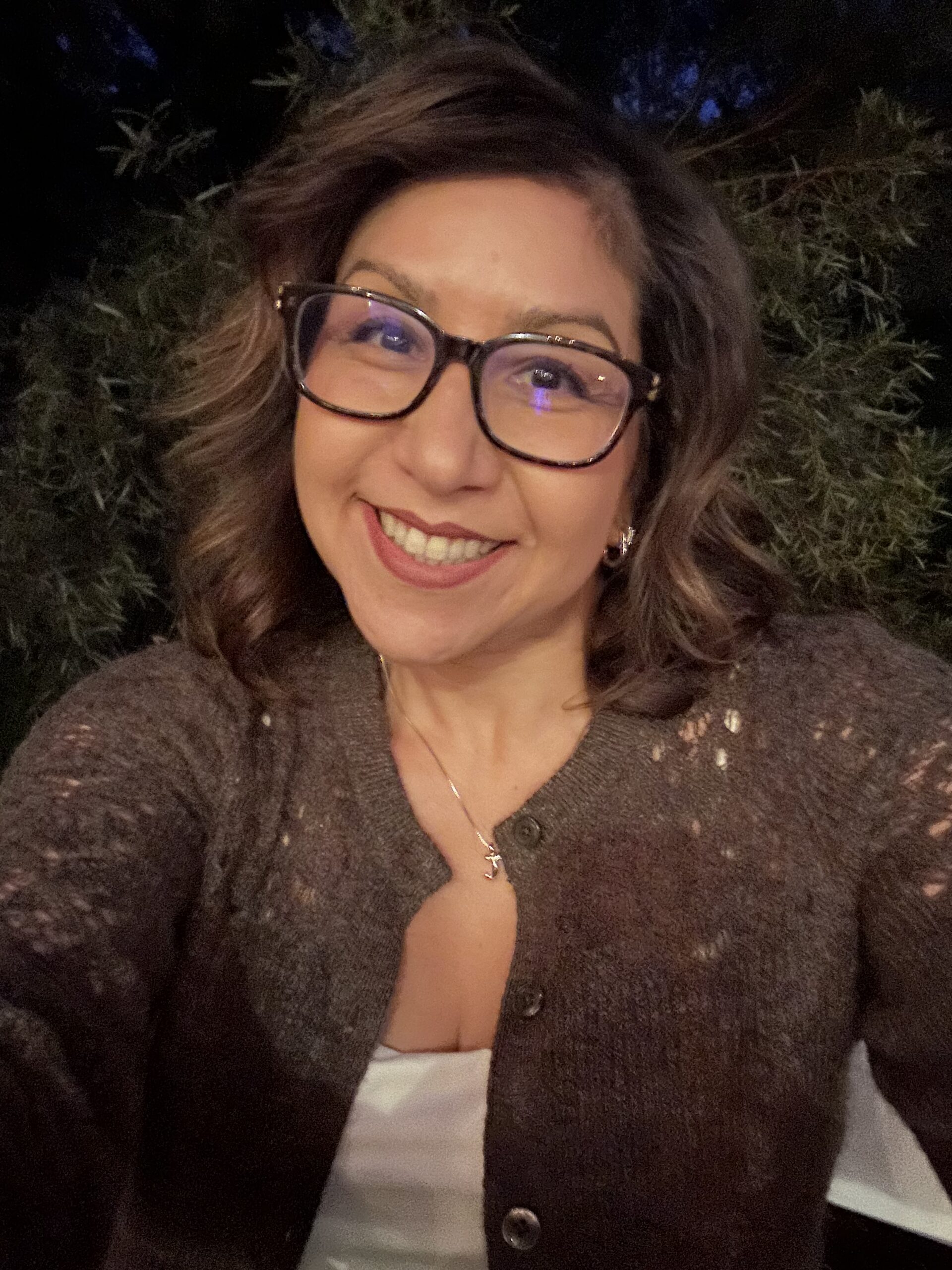
Jeannette’s Story
SoCal Model, Completed Treatment
Meet the Models, SoCal: Jeannette
“At 33, hearing the words ‘breast cancer’ felt like the end of the world as I knew it.”
On August 25, 2009, Jeannette received a diagnosis that mirrored her mother’s—invasive ductal carcinoma, stage IIb, grade 3, triple negative. She was BRCA negative, but it didn’t ease the weight of what was ahead. Chemotherapy, hair loss, a bilateral mastectomy, and infertility all loomed large. What hit hardest wasn’t just the treatment plan—it was the uncertainty. No one could promise she’d be okay when it was all over.
She fought anyway.
“Ultimately, I did make it out on the other side. This experience changed me in ways I’m still discovering today.”
Now, sixteen years later, Jeannette celebrates survivorship not as a return to what once was—but as a new beginning. She’s learned to savor birthdays, to love the “new normal,” and to never take a single breath for granted.
Her strength, she says, was bolstered by her circle—both expected and surprising. Her parents and brother were her bedrock. Her best friend, Eileen, walked with her through the darkest moments. Some friends drifted away, but others she barely knew stepped up and became family. Her CVS Pharmacy team lifted her up. And her Young Survival Coalition sisters, whom she calls her “forever family,” have been a source of shorthand understanding since 2009.
“Life has a funny, sometimes painful way of filtering your circle.”
Jeannette wants those supporting someone with breast cancer to hear what matters most:
-
Show up—even clumsily.
-
Don’t worry about saying the perfect thing.
-
Offer help with specifics (“I’m bringing dinner Tuesday” is better than “Let me know what you need”).
-
Keep checking in months later, when things are quieter but harder.
-
And remember: your presence matters more than any plan to fix things.
“The experience didn’t just change my life; it evolved my soul. I love the woman I am today—stronger, deeper, and more present.”
She knows the early days of diagnosis can feel overwhelming, but she hopes newly diagnosed survivors hear this: Don’t try to climb the mountain in one day. Just take the next breath. You’re stronger than you think—and you’re never alone.