Sona Dalal’s Story
20th Anniversary Boston Model, Completed Treatment
When were you diagnosed?
Sona Dalal was diagnosed with breast cancer in 2018.
The diagnosis came as a shock, especially because it happened just six months after her brother passed away from chemotherapy-related complications.
“There couldn’t possibly be two kids in one family,” Sona remembers thinking.
At first, breast cancer brought fear and anxiety. But over time, it also gave Sona clarity.
“It caused me to really put what’s important in my life in perspective,” she says.
For Sona, that meant cutting out the noise, the drama, and anything that no longer deserved space in her life.
“I’ll forgive you,” she says, “but I’m not giving you space anywhere else in my life.”
How did you find the lump?
Sona’s husband found the lump.
At the time, her brother’s health was declining quickly, and Sona’s first instinct was to brush it off. She did not want anyone focusing on her, including herself.
“Nobody can focus on me,” she remembers thinking. “That’s just not going to happen.”
But breast cancer changed that.
It taught Sona that it was okay to focus on herself. It was okay to take up space. It was okay to let her needs matter too.
How did you decide who to tell?
Sona was very intentional about who had access to her diagnosis.
She knew that not everyone would be helpful, and those people did not get to know. For Sona, treatment was going to be done her way, with people around her who would respect her wishes and not micromanage her.
“The people that I knew weren’t going to be helpful didn’t get to know,” she says.
The people she did let in were the ones who could show up with trust, steadiness, and support.
A close friend, lovingly called Grandma Debbie, made her chicken liver pâté to help keep her blood count up. Others simply honored what Sona needed, without trying to control the process.
“The friends that I did let in my circle were friends that would help me in ways that were very kind of like, you tell me when you need me and we’re right there,” she says.
That kind of support made all the difference.
What helped you through treatment?
Sona’s husband and boss helped her frame treatment as a fight she did not have to face alone.
Her husband is an Army veteran, and when Sona’s boss spoke with him, he told him to think of this as a war: personal, difficult, but something they would fight together.
“This is your war,” he told him. “Fight it together.”
Sona’s boss also gave her the stability she needed at work. He told her that everything would stay the same, that she could work when she could and not work when she could not.
That mattered to Sona, because continuing to be herself mattered.
“I can’t not be me and have to turn into me with something,” she says.
So she stayed Sona.
She worked full time. She kept working out. Her Wednesday chemo days became Netflix marathon days. She moved through treatment in the way that felt most true to her.
“I wasn’t Sona with a diagnosis,” she says. “I was Sona, and I had a little extra to handle.”
What was hardest for you?
For Sona, some of the hardest moments were connected to the visible changes of treatment.
When her hair started falling out, it reminded her of her brother in his sickest moments. That was painful.
But Sona found ways to stay connected to herself. She got styled for her wig before losing her hair, using her own hairstyle as the guide. She found glue-on eyebrow wigs that helped her feel more like herself.
She also protected herself from pity.
“If I saw somebody look at me with a little bit of sympathy, I would cut the conversation and talk about something else or walk away,” she says.
Sona did not want people to make her feel like she was disappearing.
She was still herself.
How do you feel now?
Physically, Sona feels great.
Her surgery was complicated. The biopsy site became necrotic, and doctors had to do a skin graft from her back, along with a latissimus overlay. But today, she is lifting weights, lifting heavy, and feeling strong.
Emotionally, there are moments. There is scanxiety. There is the awareness that stress can feel heavier after cancer. But Sona’s thoughts are not “why me” thoughts. They are more often “what can I do?” thoughts.
She feels at her best when she is helping someone else feel less afraid.
“I feel best when I can talk to other people and make them feel okay,” she says.
How have you supported others?
Sona’s experience has made her a source of comfort and guidance for others.
One of the models she encouraged to join Runway is the elementary school principal at her children’s school. Before school started one year, the principal asked Sona questions about her diagnosis and treatment. Sona sensed that something was going on.
The principal shared that she had to go in for a biopsy and had not yet told her husband. Her mother was metastatic, and she was scared.
Sona talked her through it with honesty, humor, and the kind of steadiness that can only come from someone who has been there.
“I’m standing. I’m here,” Sona says. “I went through six months of chemo. I had a double mastectomy. And then radiation. It was a process. But I’m here, and it’s very doable.”
For Sona, helping others see that truth is part of the purpose she has found in her experience.
How did you find Runway?
Sona first heard about Runway from her sister in D.C., who sent her a text asking if she wanted to apply.
At first, Sona was skeptical.
“I’m going to be 50. I am not a model,” she remembers thinking.
She does not describe herself as someone who “struts her stuff.” But one night in Las Vegas, with a little liquid courage, she decided to apply.
“I’m going to do this,” she remembers thinking.
As the event got closer, she was nervous. She did not know what to expect.
But once she arrived, everything changed.
“Being around everybody else, meeting the other women in the makeup room, and then meeting everybody in line — hooked,” she says.
The experience was both humbling and powerful.
“The humbling experience that was coupled with so much power and energy was just, this is my jam,” Sona says.
What are we celebrating this year?
Sona is excited to come to Boston for Runway’s 20th anniversary and experience the place where it all began.
This year, we are celebrating Sona’s strength.
We are celebrating the boundaries she set to protect her peace.
We are celebrating the way she helps others feel less afraid.
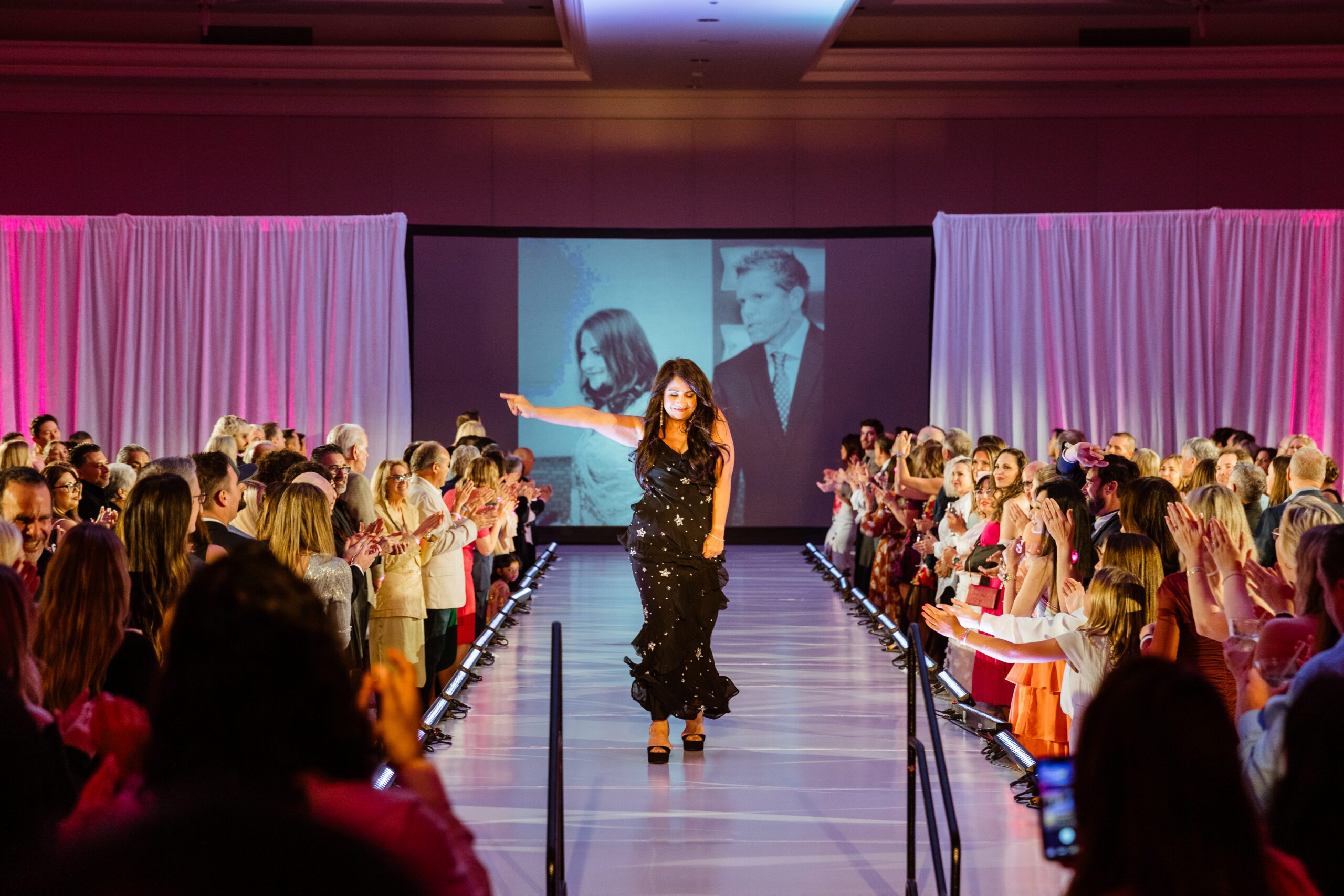
On the Runway stage, we look forward to celebrating Sona as she reminds every person watching that they are not just a diagnosis. They are still themselves, with a little extra to handle.