Olivia Terrell’s Story
20th Anniversary Boston Model, Completed Treatment & Legacy Model
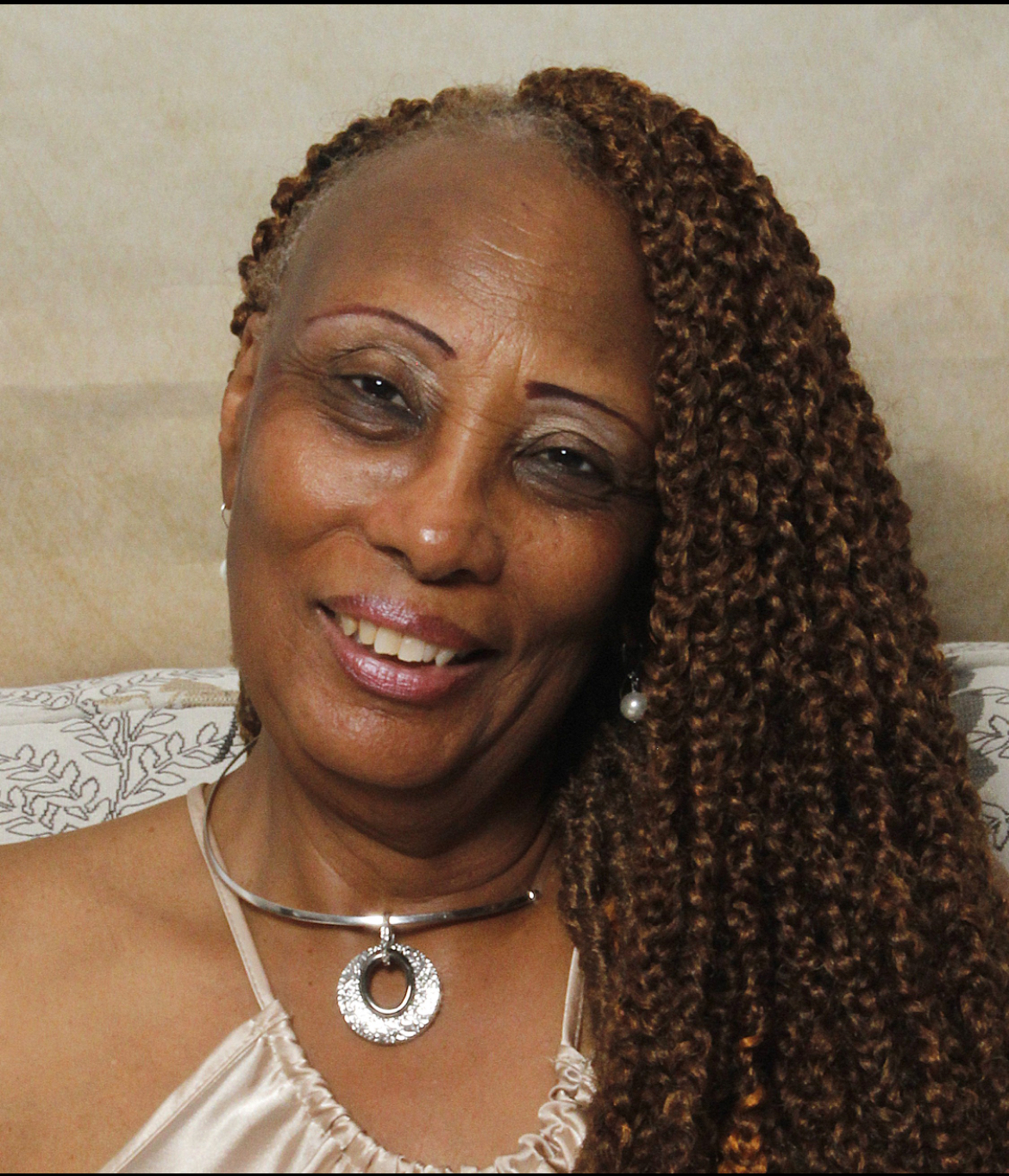
When you think about your breast cancer story, where does it begin?
For Olivia Terrell, her breast cancer story begins with a moment that could have been easy to miss.
In November 2011, Olivia participated in a clinical trial, and her mammogram came back normal. But on January 26, 2012, during her annual appointment with her primary care doctor, everything changed.
“I was laying on the table, and she said to me, ‘Olivia, I feel a lump,’” Olivia remembers.
Her doctor told her to get another mammogram as soon as possible. Olivia did. On February 7, 2012 — her father’s 88th birthday — the diagnosis was confirmed.
She was 52 years old.
“It was very shocking for me,” she says.
What did treatment look like?
Olivia had her lumpectomy on March 1, 2012 — the 20th anniversary of her father’s passing. She went on to receive chemotherapy and six weeks of radiation, Monday through Friday.
At the time, Olivia was working at Boston Medical Center, where she also received her treatment. For much of chemotherapy, she continued to work in the morning and receive treatment in the afternoon.
“I worked from 7:30 to 12:30, and then I did chemo from 1 to 4,” she says.
Her care team became an important part of her story. Olivia remembers the nurses who could look at her and know exactly what she needed that day.
“My nurse would say, ‘Today you need to have your chemo laying down. You look really tired,’” Olivia says.
They reminded her that she was not just a patient. She was one of them.
“They would always be there and say, ‘You’re one of us, and you’re going to get through this.’”
Eventually, Olivia’s doctor told her she needed to stop working and go on full-time FMLA. She had tried to push through, but her body needed rest.
“She said, ‘No more,’” Olivia remembers. “‘You’re not going to make it.’”
What were some of the lasting effects of treatment?
During chemotherapy, Olivia developed permanent nerve damage.
“It actually began in the ninth round,” she says.
Today, she lives with peripheral neuropathy in her hands and feet. At its worst, the pain was so severe she could not stand for a sheet to touch her feet. She wore slides through the cold months because enclosed shoes hurt too much.
Even now, she can only wear certain types of shoes.
“I can’t wear heels anymore because it still hurts,” she says.
But Olivia has learned to live through the pain.
“I’m a fighter,” she says.
Why do you call yourself a breast cancer warrior?
Olivia does not call herself only a survivor. She calls herself a breast cancer warrior.
March 1 of this year marked her 13th year since surgery, and she carries that milestone with gratitude.
“I’m grateful that God gave me a second chance,” she says.
Every October, a friend who owns a business makes Olivia something pink. The tagline is always the same: “Fight like a girl.”
Olivia has taken that message to heart.
“You have to go in and fight,” she says. “I think half of the battle is your mindset sometimes. If you go in defeated, then you’re not going to make it.”
How has your sister’s diagnosis shaped your story?
This year has brought a new layer of grief to Olivia’s breast cancer journey.
On March 18, 2026, Olivia lost her sister. Her sister had been diagnosed with breast cancer on February 28, 2025, at 80 years old.
“It was very triggering for me to go through this with her,” Olivia says.
But Olivia knew how important it was to be there. She became her sister’s advocate, attending appointments, listening, asking questions, and helping her understand what was happening.
“I went to her appointments,” Olivia says. “I was there for the lumpectomy.”
Her sister entered the hospital on February 12 and passed away on March 18. Olivia was able to be with her near the end.
“She waited for me to get there,” Olivia says.
When Olivia arrived, she told her sister it was okay to let go.
“I know she was tired,” she says.
Why is advocacy so important to you?
“I advocate for all women,” she says. “And I especially advocate for African American women and Latino women.”
She knows that breast cancer can be aggressive. She also knows how important it is for women to know their family history and share it with their doctors.
When Olivia was first diagnosed, she did not know that her maternal aunt had breast cancer in both breasts. Her aunt had chosen not to be treated, and the family had kept that history quiet for years.
That secrecy was hard for Olivia to process.
Now, Olivia makes sure her own family knows their history. She has two sons and one grandson, and she believes that information matters.
“One thing I do is I make sure I share my family history,” she says.
What does support look like to you?
For Olivia, support does not always have to be complicated.
Sometimes, it means going with someone to an appointment. Sometimes, it means sitting in the waiting room. Sometimes, it means answering the phone or simply listening.
“I think it’s important for us as women to support each other in whatever way we can,” she says.
Olivia has gone with others to appointments because she understands how scary it can be, especially for women who know their family history and are afraid to find out what a mammogram might show.
“I advocate,” she says. “I’ve been there.”
During her own treatment, she also learned how meaningful everyday kindness could be. At work, once coworkers realized she had breast cancer, they began checking in. One coworker gave her a coffee mug. Olivia could not drink coffee at the time because treatment changed her taste, but she used the mug for water.
She still has that cup today.
What do you want people to understand about breast cancer today?
“I think it’s important to know that a breast cancer diagnosis is no longer a death sentence,” she says.
She has seen how much has changed between her own diagnosis in 2012 and her sister’s diagnosis in 2025. Treatments, options, and resources have continued to evolve.
That is why she keeps educating, advocating, and encouraging people to get screened.
“That’s what we’re supposed to do,” Olivia says. “We’re supposed to educate each other.”
How are you feeling about walking the Runway stage?
Olivia is honored to be part of Runway for Recovery.
“I’m very honored to be selected as one of the models,” she says.
She walks for many reasons: for herself, for her sister, and for every person impacted by breast cancer.
“I’m walking for myself,” Olivia says. “I’m walking for the memory of my sister, and for every single person that has been diagnosed.”
On the Runway stage, Olivia will represent 13 years of survivorship, the grief of losing her sister, the strength of advocacy, and the power of a woman who has chosen to use her second chance to help others.
She is a breast cancer warrior — and she is still fighting, teaching, and showing others what is possible.