Laura Gradel’s Story
20th Anniversary Boston Model, Completed Treatment
When you think about your breast cancer story, where does it begin?
Laura Gradel’s breast cancer story begins with self-advocacy.
She was 32, trying to get pregnant, when she found a lump herself.
Laura went to her doctor, who agreed she should get a mammogram and have it checked. But getting someone to see her was not simple. Even with her doctor calling on her behalf, it took weeks.
“I called four or five hospitals in Boston to try to get in, and nobody would put me on the schedule,” she says.
By the time Laura finally got an appointment, she had just learned she was pregnant. Because she was early in pregnancy, doctors did an ultrasound rather than a mammogram. They thought the lump was a cyst.
“They were like, ‘We think it’s a cyst. We’re just going to drain it, and it’ll be fine,’” Laura remembers.
But the next day, Laura could still feel it.
“No,” she remembers thinking. “I can still feel it. It’s still here.”
After multiple phone calls, she went back in. This time, they did a mammogram. Once the radiologist saw the images, the answer was clear.
“This is so obviously breast cancer,” Laura remembers being told the second time around.
How did that experience change the way you advocate for yourself?
For Laura, the experience changed the way she understands her own body.
She had an aggressive type of breast cancer that required quick action. But the process of being seen had been slow and frustrating. In some senses, Laura’s ability to get a diagnosis and complete treatment began with her own persistence and self-advocacy.
“I do have some sense of what’s wrong in my body or what’s right,” she says.
That lesson carried beyond cancer. It shaped how Laura approached pregnancy, birth, medical appointments, and her own health after treatment.
“I want to make sure I feel like I can advocate for myself,” she says. “I have a lot of questions.”
Laura believes in listening to doctors and trusting medical care, but she also believes in asking questions, getting information, and bringing someone with you who can help you listen and advocate.
“You have to be able to ask the questions, or say more, or get more information,” she says.
How did pregnancy shape your diagnosis and treatment?
The pregnancy piece was one of the hardest parts of Laura’s story.
It was her first pregnancy. But because of the type and speed of her cancer, her doctors did not have a treatment plan that would allow the pregnancy to continue.
“They pretty much said, ‘We can’t tell you what to do, but we don’t have a treatment plan for you that will allow this pregnancy to continue,’” Laura says.
Laura still struggles with the way that choice felt.
“Technically I made a decision and I signed a form,” she says. “But it very much felt like I can get cancer treatment, or I can put this off for nine months and potentially be extremely sick.”
Because HER2-positive cancer can move quickly, treatment needed to begin right away. That urgency also meant Laura was not able to pursue egg freezing or retrieval before starting treatment.
“The fertility piece at 32, feeling like this is my window to have kids, and what if that doesn’t happen — that was pretty stressful,” she says.
What did treatment look like?
Laura was treated at MGH.
Her treatment plan included chemotherapy, surgery, and radiation. Because her cancer was HER2-positive, she was able to receive targeted drugs, something she feels grateful was available by the time she was diagnosed.
Laura started chemotherapy just a few weeks after diagnosis. She also participated in a clinical trial, which helped her avoid some of the harsher drugs that could have been harder on her body and fertility.
By the time she had surgery, she had a complete response to chemo.
Laura had a right-side mastectomy. Because she hoped to have children and try breastfeeding, she chose not to have a double mastectomy.
“I only had cancer on my right side, so I had an option,” she says. “Because I really wanted to have kids and try breastfeeding, I just did the one side. I’m happy I did.”
What was it like to keep parts of your story private?
Laura cold capped during chemotherapy, which helped her keep her hair. She was grateful for the option, but it also created an unexpected layer to her experience.
“I did it because I was like, I don’t want everyone to know that I have cancer,” she says.
But then, many people really did not know.
After surgery leave, someone at work asked her, “How’s the baby?” Laura had to sit with the fact that this person did not know the pregnancy had ended, or that she had been in cancer treatment.
That experience stayed with her and shaped the way she thought about sharing her story.
“I didn’t even really know what story I wanted to tell,” she says.
When she later started a new job, Laura remembers saying that no one there would know she had ever had cancer. But over time, that began to shift.
“Do you want it to be part of your story?” she says.
At first, Laura wanted to handle it and move forward. But now, with more time and more young people around her being diagnosed, sharing feels more important.
“It feels more important now to me to be able to say something about it,” she says.
How has your story changed over time?
Laura’s relationship to her own story has evolved.
She met Meredith Parkinson, who connected her to Runway, through a support group. At the time, she was toward the end of treatment. Later, after treatment, she became pregnant and had children.
In some spaces, Laura felt like she became an example of the “success story.”
“See, Laura got pregnant. Everything can be fine,” she remembers.
But that never felt like the whole truth.
Now, Laura feels more able to tell the full version: yes, there can be life after treatment. Yes, she has two children. Yes, beautiful things happened. But cancer still changed her. The loss of her first pregnancy has not disappeared simply because she now has two boys.
“I feel like I can tell the full story,” she says. “It’s not the end of your life, hopefully, and hopefully all these other things are going to happen for you, but also it still impacts who you are.”
How do you talk to your children about it?
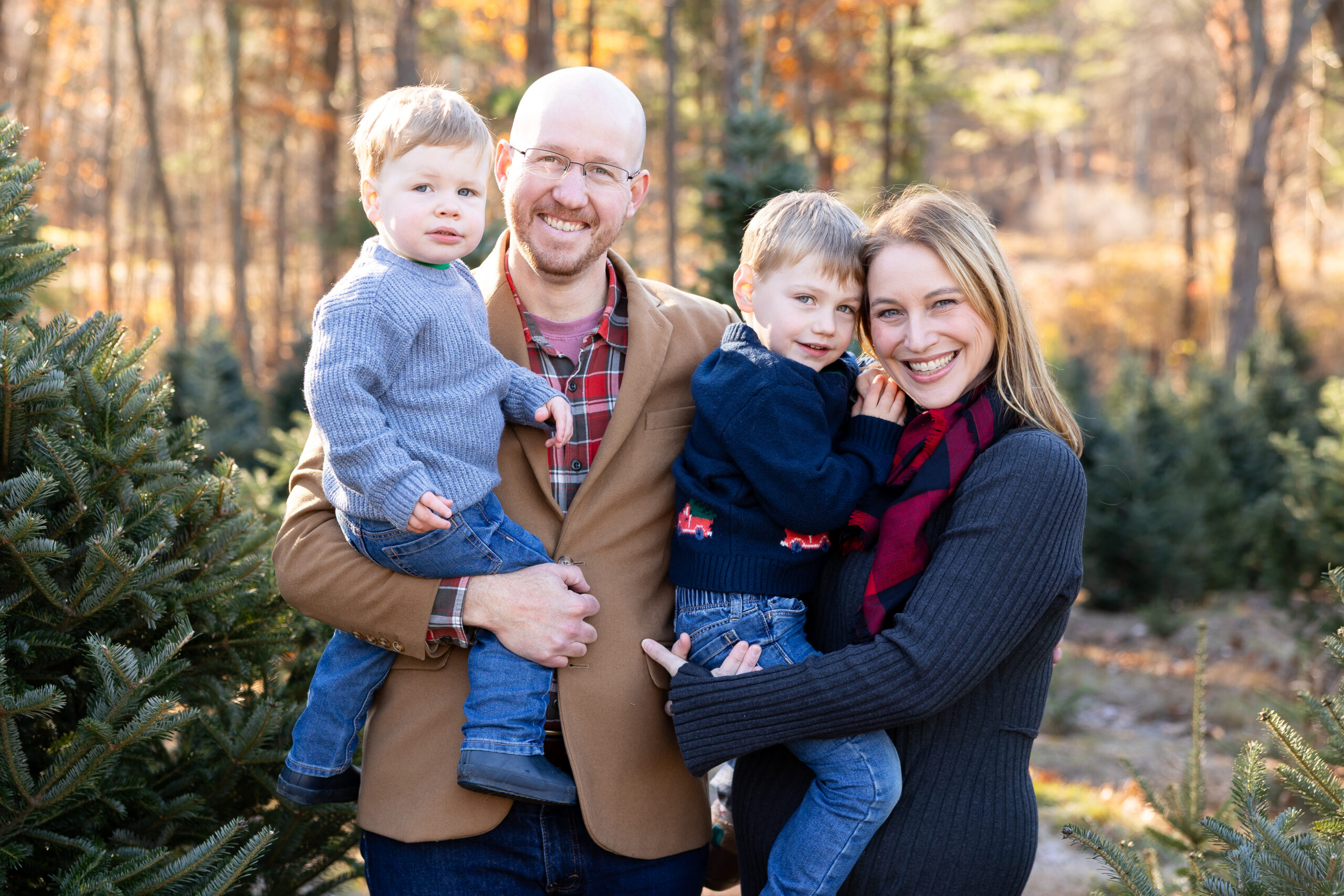
Laura now has two boys: Marty, who is four and a half, and Felix, who is two.
They do not know the full story yet, but Marty has started to notice things. Recently, he saw Laura’s port scar and asked how she got it.
Laura tries to answer in a way that is simple, honest, and age-appropriate.
“Mommy was really sick, and I had to get special medicine,” she tells him. “They had to put this in so I could get the medicine, and then when it was done, they took it out.”
For now, that is enough.
But with Runway on the horizon, Laura is beginning to think differently about how she shares her story with the wider circle of people in her life.
“I want to be able to just talk about it,” she says. “And not be protecting people from feeling sad or feeling overwhelmed.”
What did support look like during treatment?
Laura learned a lot about what it means to truly show up for someone.
Some comments were hard. People tried to sugarcoat or simplify what she was going through, saying things like, “You’ll get new boobs.”
“I think people really struggle in our society,” Laura says. “I don’t think we have a culture around grief and process and being comfortable with just being with someone and being like, this is horrible and I’m here for you.”
What helped most were the people who showed up without needing Laura to entertain them, comfort them, or make them feel better.
Friends came to chemo. Others came to her house after treatment, brought food for the freezer, planned low-key things to do together, or simply sat nearby with a book.
“I’m just going to be here,” Laura remembers people communicating. “Whatever you want to do or need to do, I’m here for.”
That kind of support mattered.
What are you most excited about for Runway?
Laura is excited to get dressed up and be part of the event, but more than that, she is excited to tell the full story.
“This is my full story and experience of cancer,” she says.
She is also excited to push herself to celebrate it.
“It’s worth noting that I went through this, and that I did it, and that I’m okay,” she says.
For a long time, Laura’s experience felt internal and private. Runway gives her a way to share it with her community and to talk about why it matters.
“I’m excited to change how I think about it, even myself, as part of a community celebration,” she says.
What does stepping onto the Runway stage mean to you?
“I’m excited to be part of it,” she says. “It’s a real opportunity to be excited about your body that kind of let you down in the past.”
She may not feel perfect. She may still be figuring out how she feels in her body. But she knows it deserves to be honored for what it survived and what it made possible.
“I may not even love how I look yet,” Laura says. “But I can still celebrate what it’s been able to do and what I can do now.”
On the Runway stage, we look forward to celebrating Laura’s self-advocacy, her honesty, her motherhood, and the full story she is finally ready to tell.