Kristen Isola’s Story
20th Anniversary Boston Model, Completed Treatment
How has breast cancer affected you?
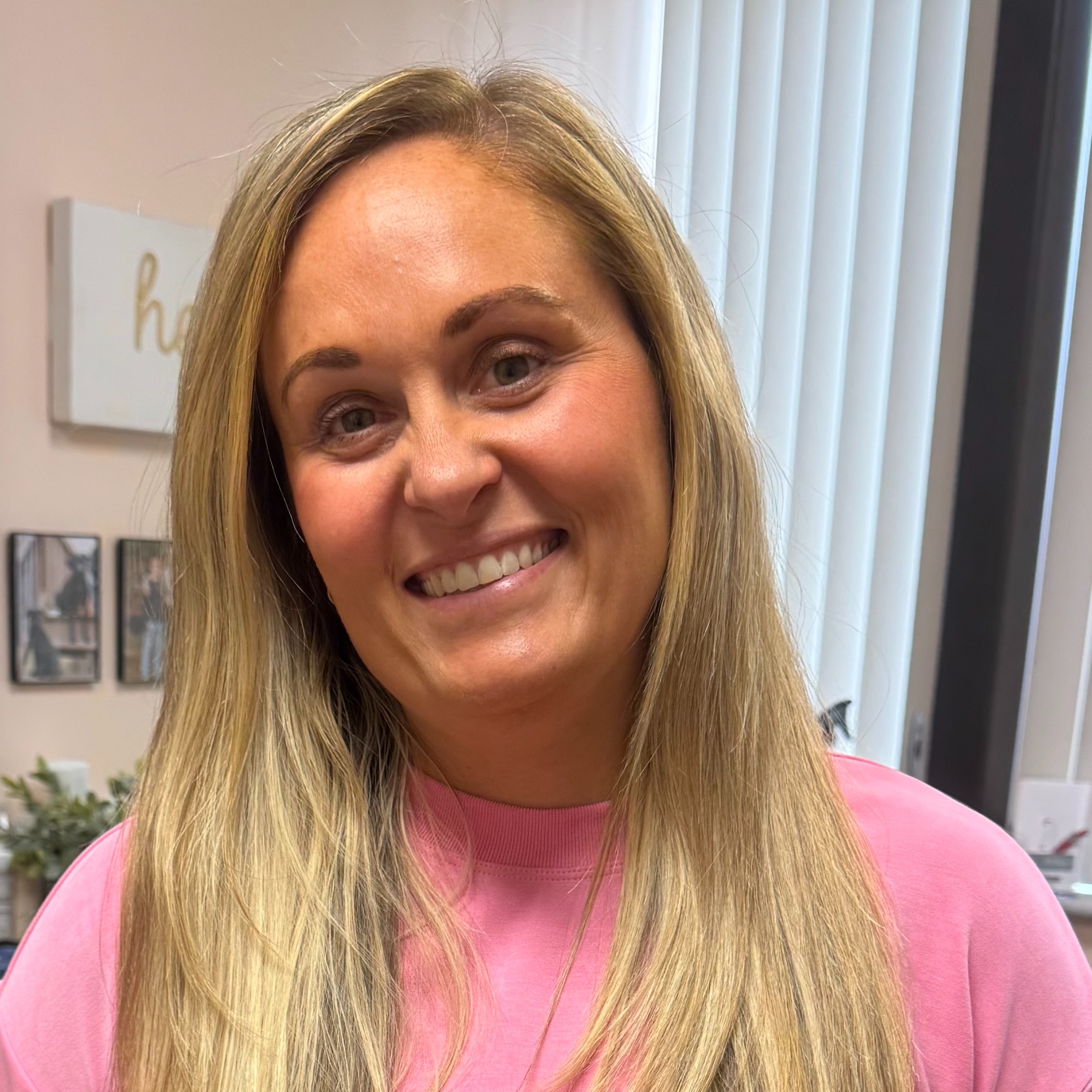
Kristen Isola was 40 years old when breast cancer became part of her story.
Three days after her 40th birthday, she had her first mammogram. It came back clear, and Kristen felt like she was doing all the right things.
Around that same time, breast cancer had been showing up in her life in other ways. A close friend had been diagnosed four years earlier. Another friend had been diagnosed with early-stage breast cancer that fall.
Those experiences made Kristen start paying closer attention to her own body.
“I should really start doing breast exams more often,” she remembers thinking.
Then, one night in January, Kristen was lying in bed when she felt something on her left side.
At first, she tried to reassure herself.
It’s fine. It’s fine. It’s fine.
But deep down, she knew.
“In that moment, I just knew,” Kristen says. “I knew where this was going to go.”
When were you diagnosed?
Kristen was diagnosed in February 2025 with ER/PR-positive stage II invasive ductal carcinoma with lymph node involvement.
She also learned that she carries the ATM mutation. Kristen was the first person in her family to discover that the mutation was present. No one in her immediate family had previously had breast cancer, though a distant great-grandparent had died of pancreatic cancer in their 50s.
Before her diagnosis, Kristen did not know this was part of her family’s story.
After diagnosis, her life became months of treatment, one step at a time.
Kristen completed eight rounds of chemotherapy, two surgeries, and 30 rounds of radiation. She finished treatment in October.
From January through October, life became a long, overwhelming stretch of appointments, decisions, treatment, and recovery.
“It was months of just kind of living step by step,” Kristen says.
Now, she is grateful to be on the other side of that part of her story.
What was it like to be diagnosed at 40?
Being diagnosed at 40 felt surreal.
Kristen is a nurse, so she knew breast cancer could happen to younger people. But knowing that intellectually was different from becoming part of that world herself.
“You think this doesn’t happen to people that are young,” Kristen says.
Once she entered the breast cancer community, she realized how many people are diagnosed under 40, and even younger. The picture she had once carried in her mind changed quickly.
There were wonderful people she met along the way, people she might not have known otherwise. But those connections came through circumstances no one would ever choose.
As so many people in the breast cancer community say, it is an incredible club no one wants to join.
How did you find Runway?
Kristen found Runway the way many people find new communities after diagnosis: online.
While she was sick, she spent time searching for answers, information, timelines, and stories. She remembers looking up things like when her hair might grow back and searching for breast cancer content while lying in bed.
Somewhere along the way, Runway for Recovery appeared on her feed. Someone had reposted about the New York show, and Kristen wanted to learn more.
“What is this Runway thing?” she remembers thinking.
When she realized Runway was based in Massachusetts and that there was a Boston show, the timing felt meaningful.
The 20th Anniversary Show would take place almost one year to the day after Kristen finished treatment.
For Kristen, it felt like a full-circle moment.
“What better way to celebrate that you get a second chance?” she says.
Why does walking feel meaningful to you?
For Kristen, walking the Runway stage is about celebration, community, and giving back.
It is a chance to be in a room full of people who understand different versions of what she and her family have been through.
Kristen knows her family has been fortunate. Her insurance was strong, and breast cancer did not become the kind of financial burden it can be for so many families.
That makes giving back feel especially important.
“I want people to not have any stresses around taking care of yourself,” she says.
Through Runway, Kristen hopes to help support families who may not have the same resources and stability her family had during treatment.
What do you want your boys to see?
Kristen has two sons, ages 12 and 9.
Kristen wants her boys to understand that breast cancer was a moment in their family’s story, but it is not the whole story.
“This is a moment in our story,” Kristen says. “It isn’t who your mom is.”
She wants them to see that life goes on — that after the hard parts, there can still be celebration.
What has this experience been like for your children?
Kristen had a strong support network during treatment, but she knows children experience a parent’s diagnosis differently.
As an adult, she had other moms, other patients, and other people who could understand. But kids do not always have that same kind of support.
One boy in her older son’s grade had a mother with stage IV breast cancer who later passed away. At one point, the two boys connected.
“He’s like, ‘I get it. Your mom has cancer too,’” Kristen says.
That moment stayed with her.
“The kids get it,” Kristen says. “Whether they say it or not, or it’s unspoken.”
That is part of what makes Runway meaningful for families. It gives children a chance to feel connected too.
What was it like being a nurse and then becoming the patient?
Kristen has been a school nurse for nearly 13 years, caring for more than 500 elementary school students each day.
Because Kristen was the only nurse in her school and knew she would be going through chemotherapy during the school year, she decided to share her diagnosis with the community.
Her students and families rallied around her with cards, bracelets, hugs, meals, and support.
Kristen worked every other week through treatment, taking chemo weeks off and returning the following week.
“Looking back, I don’t know how I did it,” she says.
But caring for others helped her keep going. The children brought brightness into hard days.
What was it like losing your hair?
For Kristen, losing her hair was one of the hardest parts, especially as a mother.
“My kids are going to see me with no hair,” she remembers worrying.
Hair loss made sickness visible, and Kristen wanted to protect her children from that.
She wore a wig through the school year. When her hair began growing back in dark chemo curls, some of the younger students simply thought she had gotten a haircut.
“Nurse Kristen, I really love your haircut,” they told her.
Even in that, Kristen found moments of lightness.
What are you most excited about for October?
Before breast cancer, she does not think she would have chosen to get up on stage for something like this. But cancer changed the way she sees courage and celebration.
“If you can go through the darkest and hardest things, you can step outside your comfort zone,” Kristen says. “If you can do this, you can do anything.”
What are we celebrating this year?
This year, we are celebrating Kristen’s nearly one year since finishing treatment.
And her strength to show her boys that she is still herself.
And, most importantly, her courage to step outside her comfort zone to show that life can be okay after breast cancer.