Caileigh Scott’s Story
20th Anniversary Boston Model, Completed Treatment
When you think about your breast cancer story, where does it begin?
For Caileigh, breast cancer changed the trajectory of her life in ways that were frightening, difficult, and also unexpectedly clarifying.
She was diagnosed in 2022, coming out of the pandemic, at a time when she says many people were already reconnecting with art, creativity, and the things that made them feel alive.
“I think the pandemic really reconnected a lot of people to art,” she says. “When there was nothing else to do, all anyone wanted to do was dance in a forest.”
Then came cancer—diagnosis, chemotherapy, surgery, and the reality of navigating something life-altering. But through it all, Caileigh found herself pulled back toward what she loved.
“It really made me realize, no, you get one life,” she says. “Do what you love to do.”
For Caileigh, that meant recommitting to the creative life she was already building.
“It was just reminding me that I was already doing what I love.”
How did cancer change the way you approach life?
“I’ve been a lot more willing to just say yes and see how something goes,” she says.
That shift brought new friendships into her life, including some of the closest friendships she has now. Some came directly through cancer; others came because cancer changed the way she approached the world.
“I probably wouldn’t have met them had cancer not sort of shifted the way that I approach certain aspects of life,” she says.
What was it like walking the Runway stage in New York?
Caileigh had walked runways before. As a former runway model, she knew what a fashion show felt like. But she was not sure what this kind of runway experience would be.
“I knew what to expect in the sense that I know what a runway show is,” she says. “But I wasn’t really sure what to expect otherwise.”
She had been in cancer-related spaces before that did not always feel comfortable. Sometimes, she says, survivors can feel like they are being treated as symbols instead of people.
“I’ve definitely felt like a prop at times in other environments,” she says.
Because of that, she entered the experience with some uncertainty. But once she arrived, the feeling changed.
“I remember texting a friend when I was there, and I was like, wait, this is actually really cool,” she says. “I totally recommend this.”
What did you feel after walking the runway?
Joy.
“I think just joy,” Caileigh says. “I just had so much fun.”
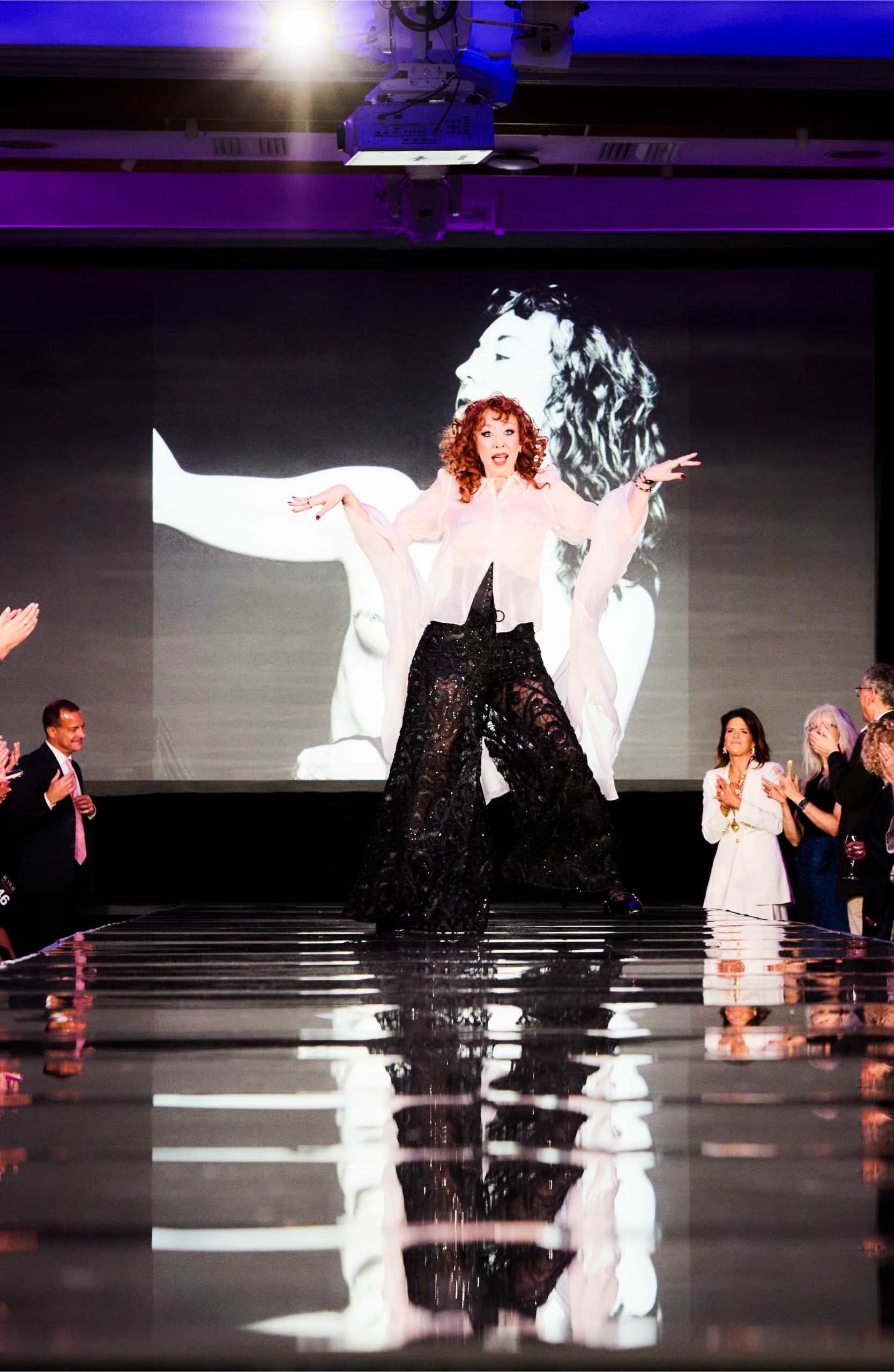
Unlike traditional runway shows, where the goal is often to stay composed and expressionless, “it was just really fun to show personality,” she says.
For Caileigh, that meant dancing. For others, it meant something else. Seeing how every model interpreted the moment made the experience even more meaningful.
“To see what that meant to everybody was really fun,” she says.
When she got off the stage, people she had befriended that day were there cheering for her.
“It was sweet and fun.”
What would you tell someone who was just diagnosed?
Caileigh wants newly diagnosed people to know that the beginning can feel like the most overwhelming part.
“You’re running all over town, moving your medical records everywhere,” she says. “You’re getting bombarded with calls from different medical facilities.”
Before there is a plan, there are so many unknowns: doctors, staging, treatment options, timing, surgery, chemotherapy, and what the next several months might look like.
“That is often so stressful,” she says.
But once treatment begins, she says something can shift. It may not be easy, but there is some relief in having a plan.
“Once you’re on a treatment, you’re kind of just on a conveyor belt at that point,” she says. “You can kind of breathe a little bit more.”
For someone still in the unknown, Caileigh offers the reminder that the chaos of the beginning will not last forever.
What kind of support was most helpful?
For Caileigh, the most helpful support came from people who anticipated specific needs instead of putting the responsibility back on her.
She says the phrase “Let me know if there’s anything I can do” can be well-intentioned, but it often asks too much of the person going through treatment.
“The patient doesn’t have the time or mental capacity to sit down and figure out how everyone can help,” she says.
What helped most were specific offers: friends asking if they could start a GoFundMe, organizing updates after surgery, sending gift cards to places she liked, or helping coordinate food in a way that did not become overwhelming.
“Suggest specific things versus just kind of saying, let me know how I can help,” she says.
She also recommends that people who are not in the innermost circle connect with someone closer to the patient and offer to be part of the support team.
What would you tell someone just diagnosed?
Caileigh wants newly diagnosed people to know that while cancer may feel all-consuming at first, it will not always be the whole story.
“It feels like it’s your whole life right now, and it kind of is,” she says. “But also, find the things.”
Find the moments, the outings, the people, the small pieces of life that still feel like yours.
“This is a moment in time,” she says. “And you will get your life back.”
What does life after cancer mean to you now?
For Caileigh, life after cancer is not about returning to exactly who she was before. It is about building a life with more intention, more creativity, and more willingness to say yes.
“You have this opportunity to build whatever life you want,” she says.
Caliegh chose to live more fully after cancer changed everything.
On the Runway stage, we look forward to celebrating Caileigh as she truly is: a person in motion, dancing in the life she has created.