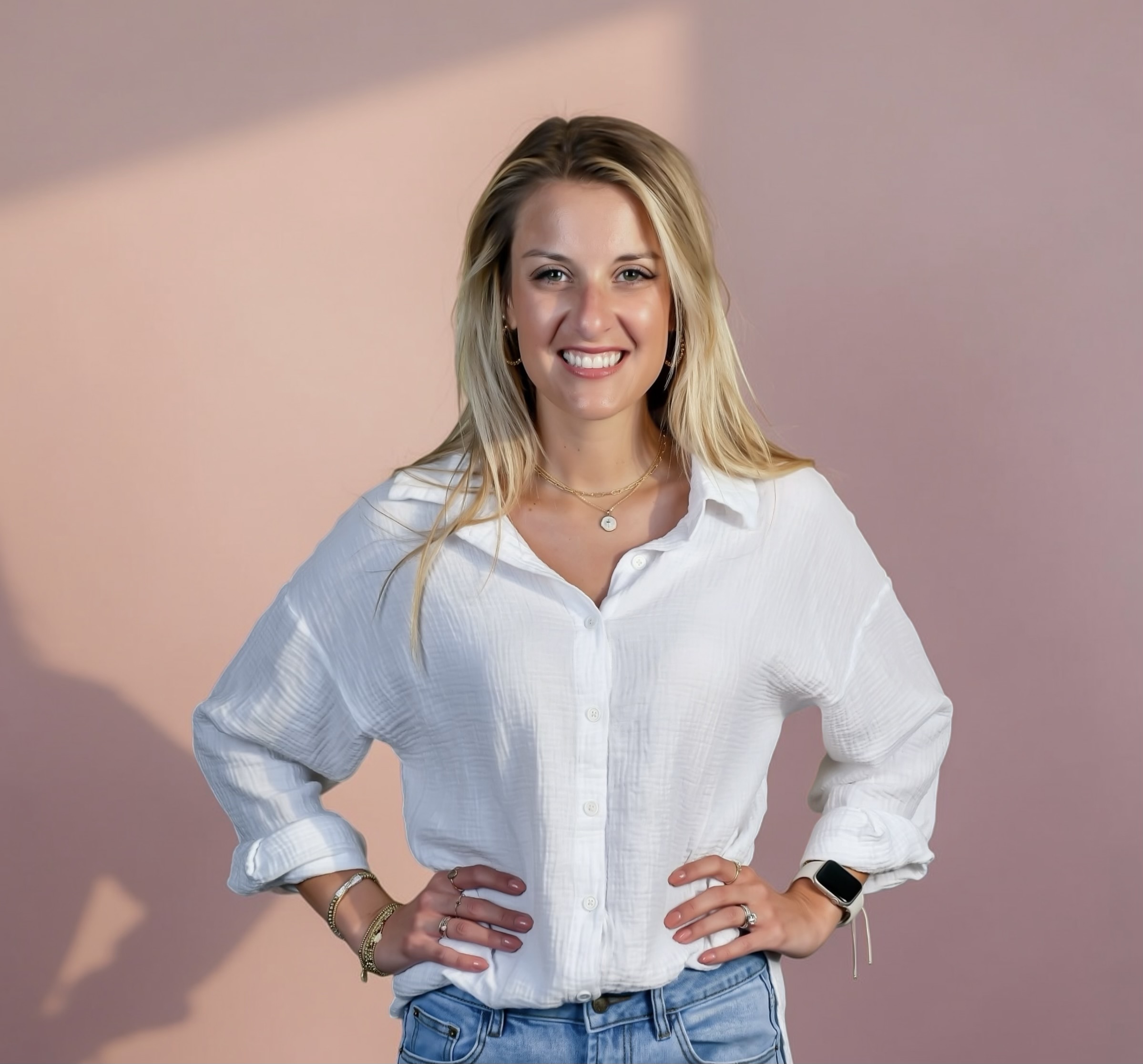
Alyssa Wakeley’s Story
20th Anniversary Boston Model, Completed Treatment
When you think about your breast cancer story, where does it begin?
Alyssa was diagnosed with breast cancer in January 2020, just as the world was beginning to shut down.
“I called it Covid Cancer year,” she says. “The double C.”
At the time, Alyssa was 27 years old and a single mom to two young children. Her son had just started kindergarten, and her daughter was three.
“I was a single mom at the time, so that was even more crazy,” she says.
After finding a lump, Alyssa went in for imaging. She had an ultrasound and biopsy on the same day. Because it was a Friday, she remembers being told they did not know for sure yet, but that she should begin preparing herself for difficult news.
The following week, she received the diagnosis: stage III breast cancer. She had DCIS, as well as HER2-positive breast cancer that had spread to her lymph nodes.
What did treatment look like for you?
Alyssa began chemotherapy almost immediately. Her first round was in early February, and soon after, the pandemic changed everything.
She completed six rounds of TCHP chemotherapy with the goal of shrinking the tumor before surgery. She was also able to cold cap successfully, which felt especially meaningful at that stage of life with young children.
“It was a huge blessing for me at the time,” she says.
After chemotherapy, Alyssa had a double mastectomy, followed by additional treatment, radiation, and the reconstruction process. By the end of 2020, she was officially no evidence of disease.
From there, she continued infusions and reconstruction, completing that part of the process in 2021.
What was it like going through breast cancer during the pandemic?
Alyssa’s treatment happened during a time when everything about medical care, family support, and daily life was changing.
“It was the transition of medicine at that time,” she says.
Because of COVID restrictions, appointments and treatment came with limits on visitors. Childcare was complicated because schools and daycares were closing, and Alyssa’s children were young. Her family lived nearby and stepped up in major ways, especially her mom, who was able to be with her.
“My family really stepped up,” she says. “That was a huge blessing.”
But the fear was constant. Being immunocompromised during the earliest days of COVID added another layer to an already overwhelming diagnosis.
“I remember getting Instacart groceries, and my mom wiping down the boxes,” Alyssa says. “It was bad for everyone, but then add on that extra layer.”
What helped you keep going?
For Alyssa, faith was central.
In 2019, not long before her diagnosis, she had been baptized again through her church. When she was diagnosed, she remembers making a conscious decision about how she wanted to move through it.
“I was like, if this is going to happen to me, please use me,” she says. “I want to impact someone. It’s going to be hard, it’s going to suck, but I just remember having a conversation with God, like, let’s go. What are we going to do?”
Her children were also her reason to keep moving forward.
“They were my why,” Alyssa says. “I just knew it wasn’t the end. It couldn’t be the end.”
What would you tell someone newly diagnosed?
Alyssa’s advice is simple: take it one day at a time.
“The journey is long, but if you look at it like that, it’s very overwhelming,” she says. “So I would just try to be one day at a time. One win.”
She also wants people to know that it is okay to feel angry, scared, or overwhelmed.
“You’re allowed to be mad,” she says. “It sucks. That’s very normal. I was mad too.”
For Alyssa, faith and positivity did not mean pretending everything was easy. They meant continuing to move through each day, even the hard ones.
How did breast cancer change the way you saw yourself?
Alyssa is honest about the physical and emotional toll of breast cancer.
After a double mastectomy, she began to understand how much language like “free boob job” misses the reality of what women actually endure.
“I’ve now realized, no, you’re actually amputating limbs from your body,” she says.
Even with reconstruction, the experience changed the way she saw herself in the mirror.
“They may be perky, but you don’t sometimes feel like a woman,” she says. “It’s very hard mentally.”
Because she was able to cold cap, Alyssa was grateful to hold onto one part of her identity during treatment.
“I was so grateful to still have that piece of me when I looked in the mirror,” she says.
What does beauty mean to you now?
Breast cancer took Alyssa through changes that affected her body, confidence, and sense of femininity. But it also deepened her belief that women impacted by breast cancer deserve spaces where they are seen, celebrated, and reminded of their beauty.
“No matter what changes have happened to your body, you are still a woman,” she says. “You’re still beautiful.”
That is part of what drew her to Runway.
Alyssa had previously participated in a breast cancer fashion show in Florida and found Runway through Instagram. When she saw the opportunity to model in Boston, she decided to say yes.
“This has been my year of yes,” she says. “I’m like, you know, I’m going to try.”
How are you feeling about stepping onto the Runway stage?
For Alyssa, modeling with Runway is about more than walking in a show. It is about being part of a community that makes room for every version of a breast cancer story: newly diagnosed, in treatment, completed treatment, metastatic, previvor, and walking in honor or memory of someone loved.
It is also about reclaiming confidence.
“I love that the world is now including breast cancer in fashion shows and walks and runway,” she says. “We are a group of women that miss out on these things.”
Now coming to Boston from Florida, Alyssa is stepping into this next chapter with faith, gratitude, and a willingness to keep saying yes.
Her story is one of young motherhood, faith, resilience, and choosing purpose in the middle of something unimaginable.