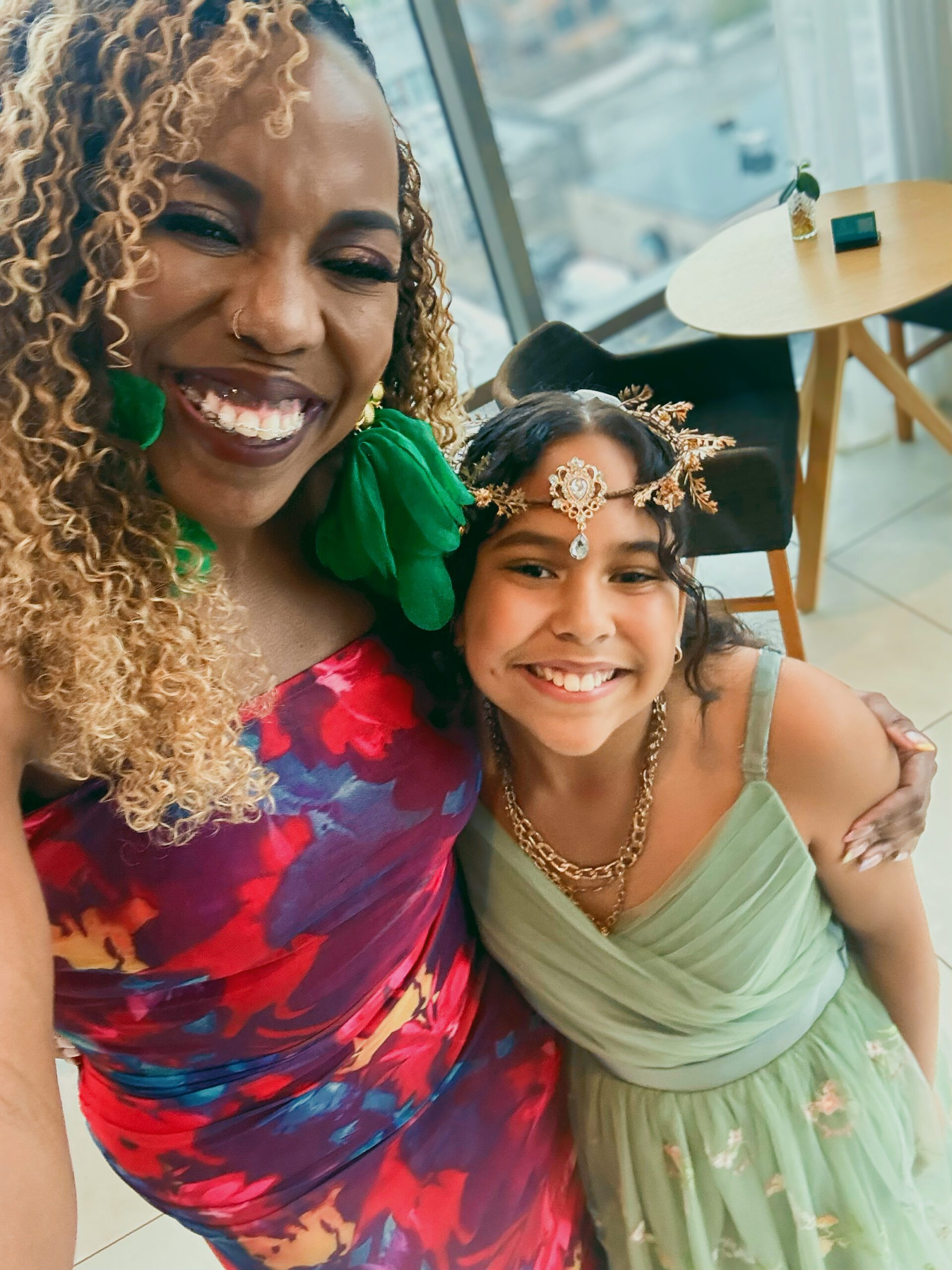
Asha’s Story
NYC Model, Completed Treatment for Breast Cancer
Asha Miller describes herself as a “breast cancer veteran”—a title that reflects not just what she has endured, but how she has chosen to show up in the world because of it. Long before her diagnosis, Asha was already using her voice—advocating in DEI spaces and sharing stories through her writing and photography. But breast cancer reshaped that advocacy into something even more personal.
Diagnosed on September 28, 2017, Asha’s life shifted in every direction at once. She was raising young children, navigating a separation and divorce, and suddenly facing a diagnosis that would impact every part of her identity.
“Breast cancer impacted every area of my life. It stole my breasts. It stole my uterus. It stole my hair—and for a while, it tried to steal my sense of womanhood. But what it didn’t steal was my voice, my fire, my faith, or my motherhood.”
Her journey included chemotherapy, radiation, and a double mastectomy with reconstruction—but just months after her implants were placed, she was faced with another devastating reality: they had to be removed due to complications causing a different type of cancer.
“I thought, okay, I’m good… and then four months later, I had to have them removed. That, for me, was the most devastating.”
Living flat became part of her reality—and part of her reckoning.
“I told myself, you’re going to stay alive until you learn to just love who you are. Because no amount of reconstruction… I’ll be reconstructing forever trying to find the perfect me.”
What followed was not a linear journey toward confidence, but an intentional, ongoing practice of self-acceptance. Through writing, storytelling, and community, Asha began redefining beauty on her own terms—embracing what she calls “radical moments” of connecting with and honoring her body exactly as it is.
And then, just as she found footing in that work, another diagnosis emerged—vitiligo, likely triggered by her treatment.
“Some days it’s like, okay, I got this. And other days I’m like, what in the world is happening again?”
There is no neat resolution in Asha’s story—and she doesn’t pretend there is. Instead, she offers something far more powerful: honesty.
She speaks openly about the layers of survivorship, the shifting identity, and the emotional weight of continuing to navigate a body that keeps changing. And yet, through it all, her commitment remains the same—to show up, to advocate, and to create space for others.
As a Black woman in the breast cancer community, Asha is deeply aware of the disparities that exist—and uses her voice to push for representation, education, and equity.
“How can I give back to my community? How can I remind others that there’s beauty in all of you?”
Her children remain at the center of everything.
“I call my children my two reasons and the fuel of my future. Being their mother gave me the strength to fight, to heal, and to keep rising.”
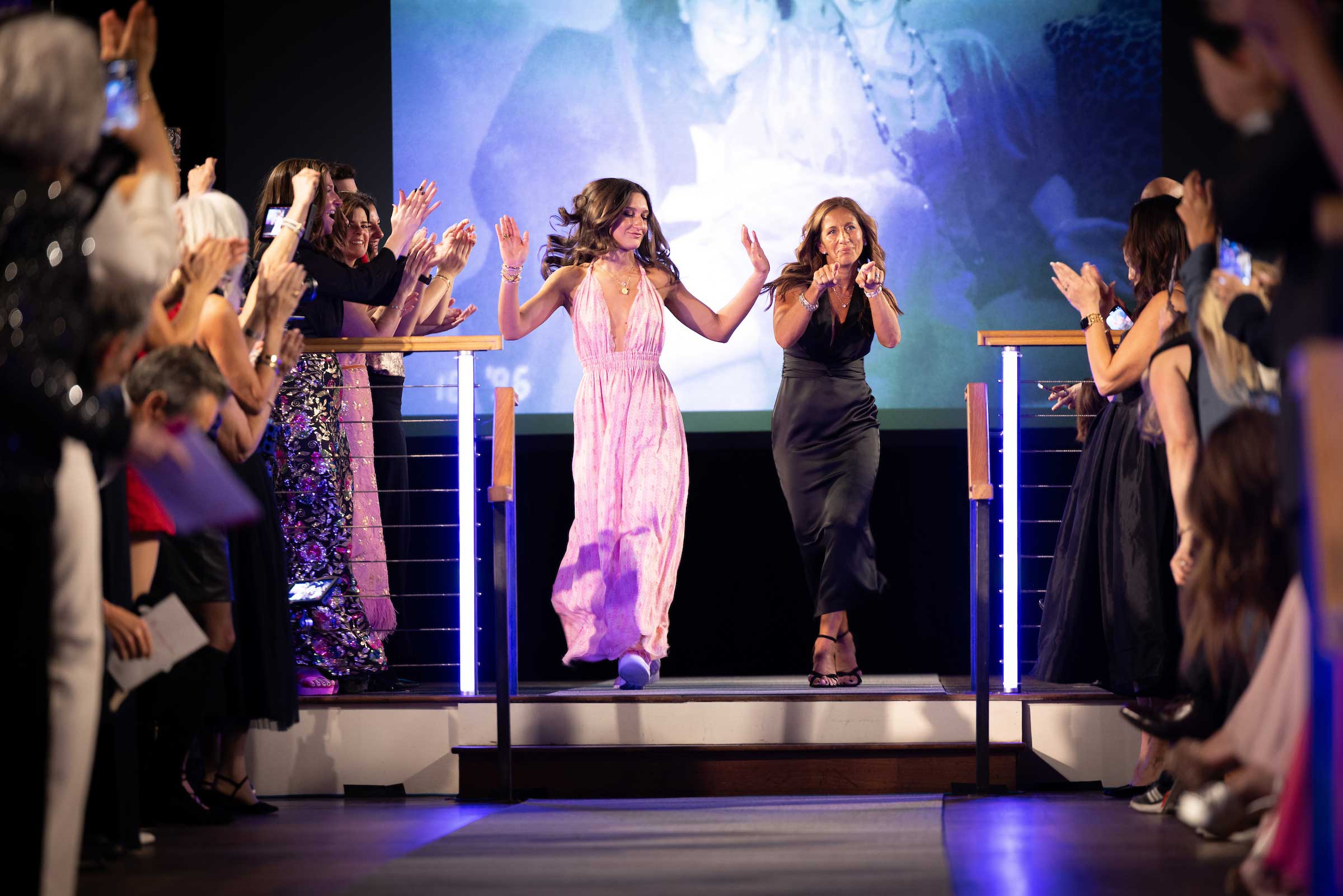
For Asha, walking the runway is not just symbolic—it is a reclamation.
“Walking the runway is more than a moment—it’s a reclamation of everything cancer tried to erase, and a declaration that I’m still here, still whole, and still becoming.”
This year, in particular, holds a different kind of meaning.
“This year feels sacred. It marks a deeper healing—not just physically, but emotionally and spiritually. After years of surviving, this is the year I’m learning to live out loud again.”
One of the most powerful moments of that healing came not in a hospital or treatment room—but at home, with her daughter.
“Hosting a womanhood dinner for my 11-year-old daughter… it reminded me that the legacy I’m building isn’t just about what I’ve survived, but what I’m teaching her to rise into.”
For Asha, Runway for Recovery is about connection as much as it is celebration.
“The cancer isn’t the gift. The people and the experiences… that’s the gift. And the community—we have the best community.”
Her story is one of resilience, yes—but more than that, it is a story of evolution. Of choosing, again and again, to meet herself where she is. Of learning that healing is not about returning to who you were, but about embracing who you are becoming.
And in that space—raw, honest, and still unfolding—Asha continues to lead.