Lorna Brunelle’s Story
20th Anniversary Boston Model, Walking for her Mother
Who are you walking for?
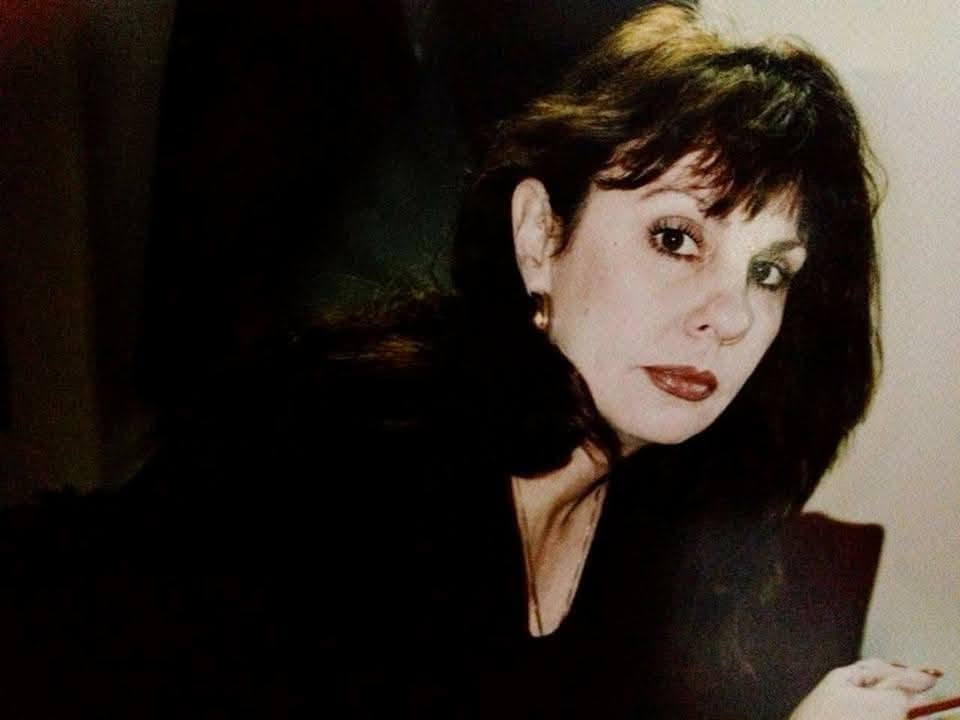
Lorna Brunelle is walking for her mother, Wanda.
Wanda was diagnosed with breast cancer in 2009 and was treated in Boston at Mass General. For a time, she was doing really well. Then, five years later, the cancer returned as metastatic disease in her bones, liver, and lungs.
At that point, Wanda and her family switched her care to Dana-Farber.
What followed was 10 unforgettable months.
“We bucket-listed for 10 incredible months,” Lorna says.
During that time, Wanda taught her family something that would shape Lorna’s life forever.
“She taught us how to live as she learned how to die,” Lorna says.
Wanda also asked Lorna to write a book about the life lessons she was teaching them as she made her transition to heaven. That book became a bestseller: The Buoy Projects.
This year marks the 10-year anniversary of the book.
Through the book, thousands of women have been encouraged to get mammograms and follow up with regular screening.
What did Wanda want people to know?
Wanda wanted people to get screened.
She had been afraid of mammograms herself. Lorna remembers that her mother was so scared she would line up a friend for support, and her doctor would send medication to help her get through it.
The mammogram that diagnosed Wanda only happened because she wanted hormone replacement therapy during menopause, and her doctor required an updated mammogram first.
That mammogram found the cancer.
After that, Wanda became determined to use her story to help others.
“She wanted to stop the stigma about the fear surrounding having a mammogram,” Lorna says.
For Wanda, it was simple: this is part of what we have to do.
Lorna has carried that message forward ever since.
How did Wanda create purpose during those final months?
During the last 10 months of her life, Wanda collected buoys.
She and her family would visit marinas throughout New England, where Wanda would approach fishermen and ask if she could take buoys from their discard piles. She would explain that she had breast cancer, that she was at the end of her life, and that collecting buoys was part of her bucket list.
And then she would ask them to use her story.
“If anyone in your life is afraid to be screened or hasn’t been screened yet,” Lorna says, “please use my story as a way to get people out there.”
How did caregiving shape your story?
Lorna was one of Wanda’s three daughters, but because she owned her own business and had flexibility in her schedule, she became the daughter who took Wanda to many of her appointments.
That experience gave Lorna a firsthand look at what cancer care feels like for a patient and a caregiver.
She packed for her mother carefully: a blanket for the back seat, a pillow, snacks, drinks, chapstick — all the little things that could make the drive from treatment in Boston back to the Cape more comfortable.
“The caregiver piece is exhausting,” Lorna says.
There are appointments, schedules, long drives, fear, stress, and the constant work of trying to anticipate what someone might need.
But Lorna also remembers the beauty.
“In the midst of the exhaustion and the chaos and the stress, there are these moments of beauty,” she says.
She calls it the grit and the grace.
What moment with your mother has stayed with you?
One day, close to the end of Wanda’s life, she called Lorna with a request.
There was a school of whales passing through Dennisport on the Cape. Wanda wanted Lorna to grab sandwiches, pick her up, and go see them.
Lorna hesitated. She was self-employed, but she had already missed so much work because of treatment and appointments.
Her mother pushed back.
“I have cancer, and I’m dying, and I’m asking you to leave work to go watch whales play with me.”
So Lorna went.
They picked up sandwiches, drove to the beach, and watched the whales play near the shore for hours.
For Lorna, that moment still holds one of the clearest lessons her mother left behind: when the good is right in front of you, lock in. Look for it. Let yourself receive it.
“You’ve got to lock in and look for the good when it’s there,” Lorna says.
How has your own cancer diagnosis changed this work?
Lorna is a two-time cancer survivor, though her cancers have been different from her mother’s.
She previously had thyroid cancer, and now she is living with stage four colorectal cancer with a nodule in her lungs. She recently completed a year of chemotherapy and is preparing for lung cancer surgery.
“It’s different, but it’s the same,” Lorna says. “We’re walking the same road together as cancer patients.”
Now, Lorna’s message has expanded. She continues to advocate for mammograms and breast cancer screening, but she also talks about colonoscopies, neck checks, second opinions, patient advocacy, and support for families impacted by cancer.
Her own diagnosis has made her even more certain that hope matters.
“It’s not your great-grandmother’s stage four,” Lorna says.
She believes that if her mother were alive today, she may have had more than 10 months. Treatments, medications, clinical trials, and care options have changed so much.
That belief fuels Lorna’s advocacy now.
“I feel like having the audacity of hope is one of the most important pieces,” she says.
What did Runway mean to you in New York?
Lorna first experienced Runway for Recovery in New York.
She sat in the front row, not knowing many people in the room. But what she witnessed changed her.
“I don’t even know what I just experienced,” she remembers saying afterward.
The room was filled with purple and pink light, emotion, power, and celebration. Lorna watched women walk the runway, turn around, and look back at photos of themselves during treatment.
“The vibe in the room at Runway for Recovery in New York infused me with so much hope,” Lorna says.
She cried, but not from sadness.
“It wasn’t sadness at all,” she says. “It was a complete celebration of life and all that comes with it.”
At the time, Lorna had recently learned she was living with stage four cancer. But in that room, watching those women, she was not afraid.
“They’re doing it. I’m doing it,” she remembers thinking. “We can do hard things.”
We are so excited to watch Lorna join the other Runway models on that stage, honoring Wanda’s legacy and celebrating her own strength.