Rebecca Muirhead’s Story
20th Anniversary Boston Model, Completed Treatment
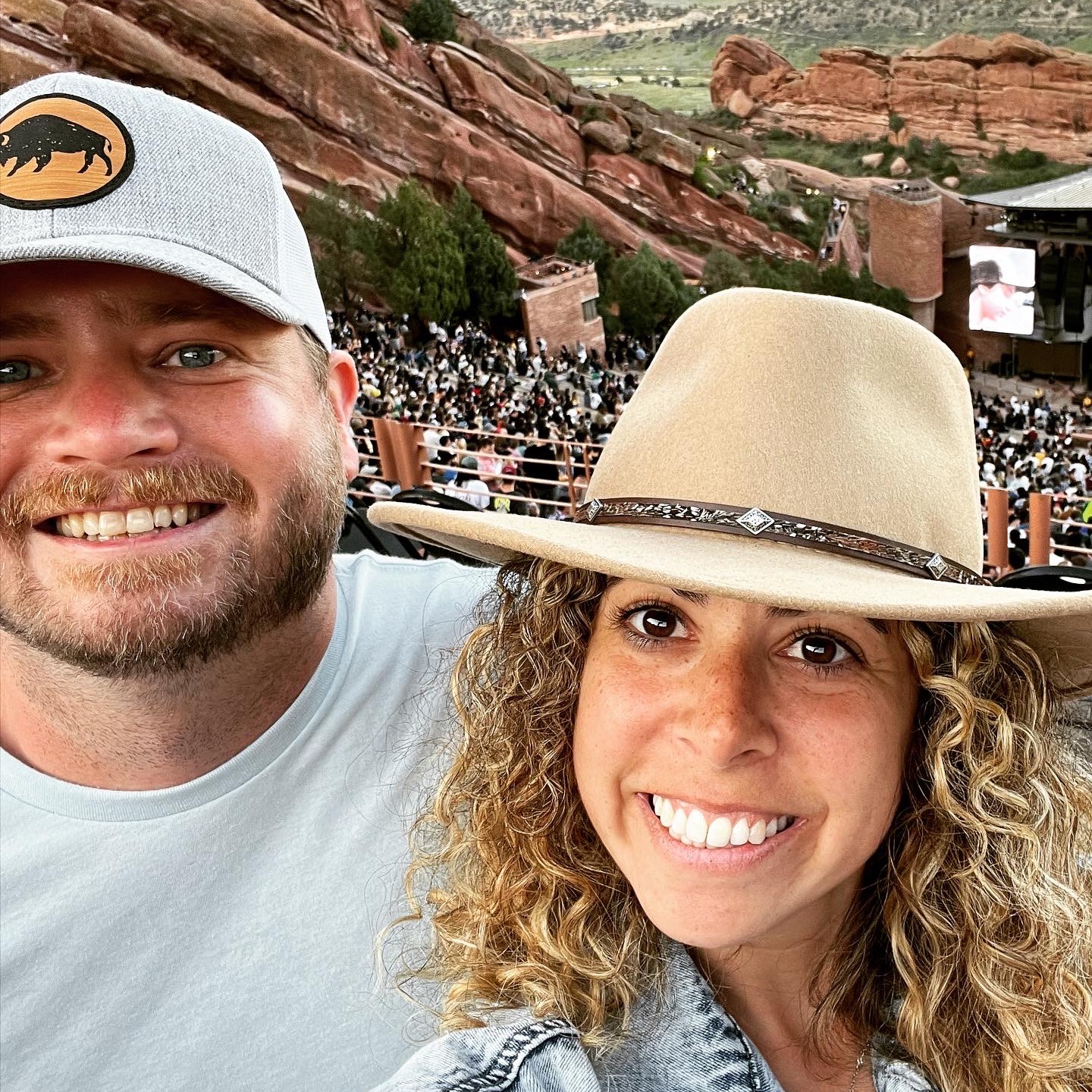
When you think about your breast cancer story, where does it begin?
For Rebecca, breast cancer was part of her life long before her own diagnosis.
Her grandmother was diagnosed around age 48. Her mother was diagnosed at 40 and later faced breast cancer a second time.
Because of her family history, Rebecca began seeing breast doctors when she was 18 years old. She started getting mammograms at 30.
This year, at 34, one of those screenings found something.
“They found some spots, and then I got an MRI,” she says. “That kind of just led to my diagnosis.”
How was your cancer found?
“I was very lucky that my doctor was being extra cautious,” she says. “She was like, just go get an MRI, make sure nothing’s in the other breast either. And that’s where they caught it.”
Rebecca was diagnosed with stage I estrogen-positive invasive breast cancer. Because it was caught early and had not spread to her lymph nodes, she did not need chemotherapy or radiation.
“They took five lymph nodes, and luckily it didn’t spread,” she says.
For Rebecca, that early detection has become one of the most important parts of her story.
“It really changed me,” she says. “I’m telling all my friends, just go and get it checked.”
What role did your mom play in your diagnosis and treatment?
Rebecca’s mother understood breast cancer in a way few people could.
“I was very lucky,” Rebecca says. “My mom came to appointments with me. She knew what questions to ask.”
Although Rebecca did not know many other women in their 30s who had been diagnosed, having her mother beside her helped her feel less alone.
What treatment did you choose?
Rebecca underwent a double mastectomy in February, along with DIEP flap reconstruction, a procedure that uses tissue from the abdomen to reconstruct the breasts.
“It was a long surgery,” she says.
Recovery was difficult, especially because of the tightness and healing involved in the abdominal surgery. But today, Rebecca says she is feeling good, walking again, back at work, and now taking estrogen blockers.
“I’m so happy I went with that,” she says of her reconstruction. “Everyone is different, and that’s their own path. But for me personally, I was like, I’m young, I wanted to look natural. I look very normal, very myself.”
What helped during recovery?
Rebecca says recovery required patience and consistency.
“My stomach was so tight because they do all that stomach work,” she says.
Even on the days she did not feel like it, she pushed herself to walk a little, stretch, and keep moving.
“There were times where I felt like, I don’t want to do this today,” she says. “But making sure I’m doing my stretches and doing it.”
She has also found silicone tape and scar massage helpful as part of the healing process.
“I’m seeing a huge difference using that,” she says.
What has this experience taught you?
Rebecca says the experience has made her more aware of how important screening, self-advocacy, and family history can be.
Because she had access to early screening, her cancer was caught at stage I. Without her mother and grandmother’s history, she likely would not have been getting mammograms in her early 30s.
That reality is not lost on her.
“It really changed me,” she says.
Now, she encourages her friends to pay attention and get checked.
Why did you want to model with Runway?
Rebecca found Runway through her friend Laura, who encouraged her to apply after sharing how empowering the experience had been.
For Rebecca, the idea of stepping onto the runway feels meaningful because she is still processing everything she has been through.
“It hits me at different moments,” she says. “I think it takes time to process.”
After surgery, recovery, and the mental weight of a diagnosis, modeling feels like a chance to stand in her strength.
“It feels good to recognize that it was tough,” she says. “It was a tough recovery for sure, and mentally it was so tough. But I can stand up there and be proud of what I did.”
How are you feeling about stepping onto the Runway stage?
“I feel like it’s going to be rewarding to kind of just be like, I did it,” she says.
Her story is one of early detection, self-advocacy, and recovery. And now, as she joins Runway, Rebecca is stepping into a community of people who understand that breast cancer does not look the same for everyone—but that no one should have to walk through it alone.