Leah Chareonchump’s Story
20th Anniversary Boston Model, Living with Metastatic Breast Cancer
When were you first diagnosed?
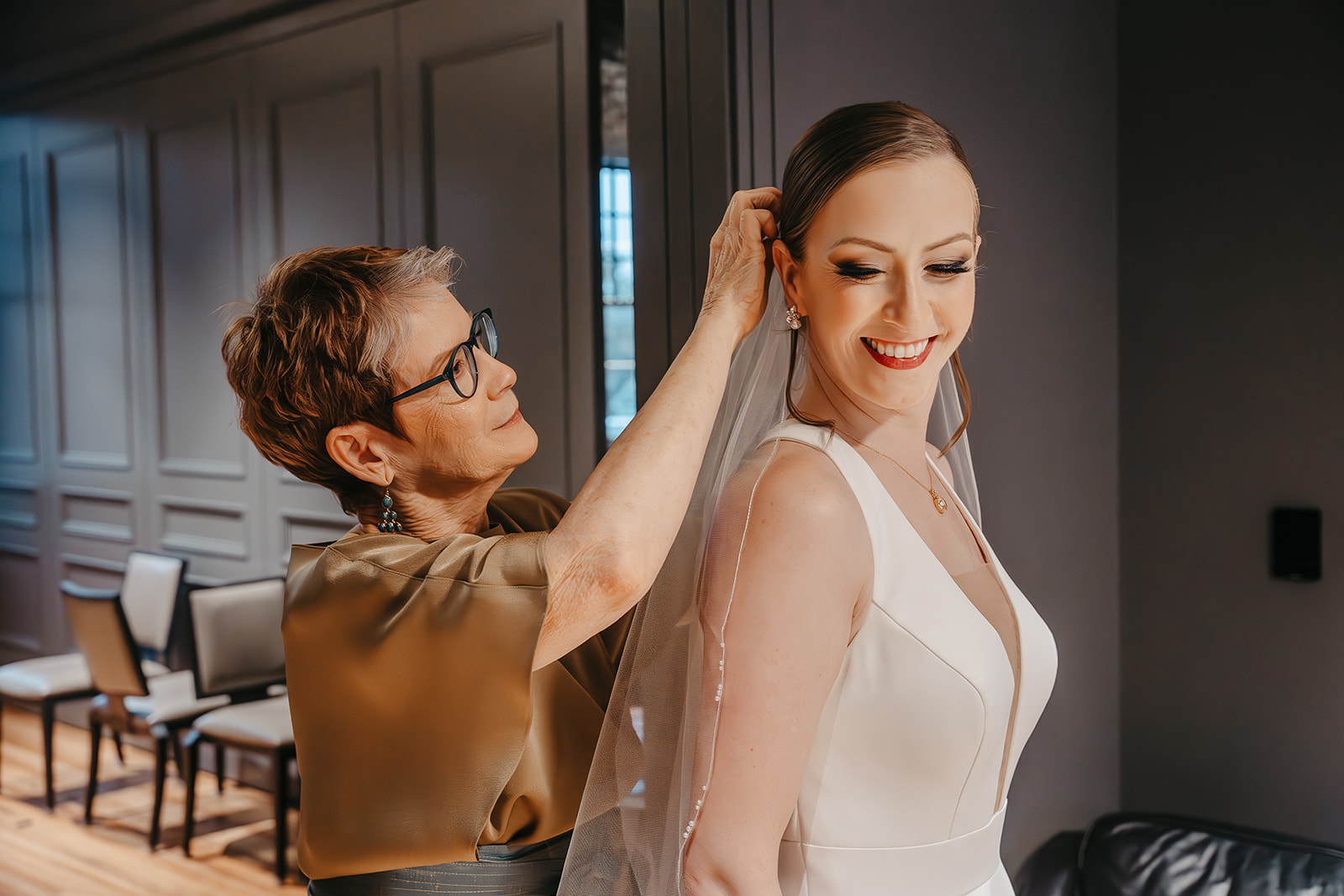
Leah Chareonchump was diagnosed with breast cancer just two weeks after her 31st birthday.
At the time, she did not have much personal experience with breast cancer. Her father had passed away from biliary cancer when Leah was 25, and while an aunt on her father’s side had breast cancer years ago and has been doing well ever since, Leah never expected to be the one facing a breast cancer diagnosis so young.
“It has been an interesting experience,” Leah says. “You always would expect it would be your mom or your aunt.”
But Leah found the lump herself.
She had very small breasts, so when she felt something on her left side, she knew it was strange. At the time, she did not have health insurance, so she paid out of pocket to see a radiologist. She was told it was just a cyst.
“You’re fine,” they told her.
“I don’t think it is fine though,” she remembers thinking.
Over the next several months, the lump grew and became painful. Her nipple started turning away. Leah kept going back to doctors, saying something was wrong, and was told it might be mastitis.
“I’m not breastfeeding,” Leah says.
Finally, Leah went to Planned Parenthood. There, a doctor took her seriously and sent her for a biopsy.
“She was like, ‘Girl, yeah, let’s get a biopsy,’” Leah says.
The biopsy confirmed what Leah had feared.
“I was right,” she says, “which I didn’t want to be right.”
What was it like to be dismissed because of your age?
For Leah, one of the most frustrating parts of her diagnosis was the way her concerns were dismissed because she was young.
She felt that doctors were not taking her seriously because they did not expect someone her age to have breast cancer.
That made no sense to her.
“Children get cancer all the time,” she says. “Why is there this weird thing with breast cancer where you have to be a certain age?”
Her experience is a reminder of something Leah now knows deeply: you know your body. If something feels wrong, it deserves to be checked. Age should never be a reason for someone’s concern to be brushed aside.
What did your treatment look like?
Leah went through chemotherapy and chose what she calls a “scorched earth” double mastectomy.
She had the left side done first and the right side later, after learning she carried an ATM gene mutation. At the time, doctors were still learning more about whether that mutation was connected to breast cancer risk. A few years later, they confirmed that Leah’s mutation was pathogenic.
The ATM gene is involved in suppressing tumor growth, and Leah says hers does not work the way it should.
“It kind of falls under BRCA1 and BRCA2,” Leah says.
Leah went through a double mastectomy, reconstruction, radiation, and endocrine therapy.
She had, as she puts it, “the gamut.”
How did you learn the cancer had returned?
A couple of years after finishing treatment, Leah started having joint pain in her hips.
At first, she assumed it might be from endocrine therapy. But the pain kept getting worse. There were periods of four or five days when she had to sleep on the floor because the pain was so intense.
Again, Leah went back to doctors and said something was wrong.
Again, she was not taken seriously.
“One doctor told me that I should see a psychiatrist,” Leah says.
Eventually, after repeatedly returning to her primary care doctor, Leah saw a new provider who referred her to a rheumatologist. That rheumatologist found her recurrence.
Leah had innumerable bone metastases — small spots scattered throughout her skeleton.
“I call it glitter,” Leah says.
Now, Leah is back on treatment, including endocrine therapy, an aromatase inhibitor, Kisqali, Zometa, Zoladex, and what she calls “all the fun stuff.”
So far, everything has been stable.
“No more growth, no progression,” Leah says. “My bones are starting to heal back up again.”
What does life look like now?
Leah is living with metastatic breast cancer, but her life still feels relatively normal.
She does not think about cancer all the time, except once a day when she takes what she calls her “giant handful of pills.”
“I do feel quite lucky in that way,” Leah says.
She is grateful to have maintained a strong quality of life. She can work when she can, rest when she needs to, and continue living in a way that feels full.
“I’ve luckily maintained a great quality of life,” she says. “I’m just very fortunate.”
Leah knows that every metastatic diagnosis is different. She also knows that, for her, having bone metastases has been more manageable than other types of recurrence might have been.
“If you’re going to have a recurrence, bones are the better one to have,” she says.
How has cancer changed your perspective?
Leah has always been a silly person.
“I’ve definitely always been a pretty big goofball,” she says.
But she also feels that cancer has increased her positivity.
A metastatic diagnosis brings a heavy dose of perspective. Things that used to stress Leah out now feel less urgent. She finds herself asking whether something really matters — and often realizing it does not.
“A lot of things that used to really stress me out, I’m just like, it doesn’t matter,” Leah says.
She jokes that she is not sure whether that mindset is optimistic or nihilistic.
“Maybe both can be good,” she says.
That humor and perspective are part of Leah’s strength. They help her move through the seriousness of metastatic breast cancer without losing herself.
What drew you to Runway?
When Leah found Runway for Recovery, she was struck by how unique it felt.
Most breast cancer organizations focus on research and finding a cure, which Leah deeply values. But Runway felt different because it supports people and families living through breast cancer right now.
“I haven’t found any other organization that does specifically what Runway does,” Leah says.
For Leah, Runway offers both infrastructure and joy.
“Providing infrastructure for people who are going through this thing, and then also making it fun,” she says.
That combination stood out to her.
Leah is coming to Boston from Alexandria, Virginia, with family in New England and excitement about joining the Runway community. She is also looking forward to meeting other people living with metastatic breast cancer, especially younger women who understand some of the same threads of her story.
What gives you hope?
Leah keeps a close eye on research, clinical trials, and what is happening in metastatic breast cancer treatment.
She is a fan of science, and she sees how quickly things are changing.
“It is really incredible,” Leah says.
She knows that 20 years ago, the outlook for metastatic breast cancer often felt very different. Now, she sees people living with metastatic disease for many years, even decades.
“There are literally people who have been living with it for like 30 years,” she says. “It’s absolutely nuts, and I think it’s a wonderful thing.”
For Leah, that progress matters. So does the community she is entering: a group of people with different stories, shared threads, and the chance to feel less alone.
On the Runway stage, we look forward to celebrating Leah, and the joy she continues to bring to life while living with metastatic breast cancer.