Barbara Bigelow’s Story
20th Anniversary Boston Model, Living with Metastatic Breast Cancer
When you think about your breast cancer story today, what milestone are you carrying?
Barbara Bigelow was diagnosed with metastatic breast cancer in 2015.
This March, she reached 10 years with no evidence of disease.
“I know,” Barbara says. “I’m the unicorn of Dana-Farber.”
The milestone is extraordinary. After years of scans, bloodwork, research, and close monitoring at Dana-Farber, Barbara is now moving to once-a-year scans.
“My oncologist was like, ‘You’ve reached this milestone, so now we’re going to do yearly scans,’” Barbara says.
She does not have to go back until next March.
“I’ve graduated,” she says.
But Barbara also knows that living with metastatic breast cancer is never simple. Even with the relief of 10 years NED, she still has a neurologist, cardiologist, endocrinologist, dermatologist, and the ongoing reality of a diagnosis that has shaped every part of her life.
What do you tell someone who has just been diagnosed with metastatic breast cancer?
Barbara’s first advice is simple.
“Breathe,” she says. “That’s the first thing.”
She tells newly diagnosed people not to go straight to Doctor Google. She tells them to ask someone with lived experience. She can share facts and statistics, but more than anything, she wants them to know that the beginning is often the hardest part.
“When you’re newly diagnosed, the most difficult time is between diagnosis and when you have a treatment plan,” Barbara says.
That waiting period can feel like free fall. There are tests, biopsies, pathology reports, and unanswered questions. There is fear. There is uncertainty.
“It’s like you’re in free fall,” Barbara says. “That was the hardest time for me.”
But once there is a plan, something shifts.
“Once you have a treatment plan, then you can marshal your resources towards that and go forward,” she says.
Barbara tells her story because she knows it helps people see that a metastatic diagnosis does not mean life ends in that moment.
“It gives them hope. And that’s what I want to do, is give people hope that it’s not over before it’s over.”
Why does lived experience matter so much?
Barbara believes deeply in the power of talking to people who truly understand.
“Don’t listen to people that don’t have the disease,” she says. “You should only talk to people with lived experience because they know what it’s like.”
For Barbara, that kind of understanding exists on a different level. People outside the diagnosis can love you, care for you, and support you, but they cannot always understand the daily reality in the same way.
“Someone from the outside that doesn’t have the disease really can’t understand it on the same molecular level that you do,” she says.
That is part of why peer-to-peer support has become such meaningful work for Barbara. Once a month, she trains people to run peer-to-peer support groups, helping create spaces where people living with metastatic breast cancer can find one another.
The feedback she hears is consistent: people feel isolated. They feel alone. They do not know where to turn.
Peer support helps change that.
It gives people information, kinship, and a place to talk honestly about quality of life, side effects, fear, treatment, and what actually helps.
“I feel like that’s really meaningful work for me,” Barbara says.
How do grief and hope live together in metastatic breast cancer?
Barbara’s story is full of hope, but it is also full of loss.
Over the 11 years she has lived with metastatic breast cancer, Barbara has lost more than 200 friends.
“I can’t even count how many people I’ve lost,” she says. “Some of them have been very dear to me.”
She does not separate metastatic breast cancer from grief.
“Loss, grief, all of that is part of having the disease,” she says.
She remembers walking a runway show in New York with a group of women living with metastatic breast cancer. There were about 23 of them. Since then, 18 have died.
“It’s the cold water reality of my life,” Barbara says.
Those women had spent time together. Now, so many of them are gone.
“How did that happen in such a short amount of time?” Barbara says.
Still, Barbara continues to look forward. Still, she continues to show up. Still, she continues to offer others hope.
Why is it important for people to understand metastatic breast cancer differently?
Barbara is honest about the misunderstandings that still surround metastatic breast cancer.
She knows that people with early-stage breast cancer can sometimes be afraid of those living with metastatic disease, as if their reality is too frightening to sit beside. She knows some people assume metastatic women are simply sitting around, miserable and waiting.
That is not Barbara’s experience.
“The perception is that we’re sitting around whining and miserable, which is not the case,” she says. “We’re very fun.”
Barbara knows there is still more work to be done in shifting the way people understand metastatic breast cancer. There is grief, yes. There is fear, yes. But there is also joy, humor, friendship, advocacy, purpose, and full, beautiful life.
That perspective matters.
Why are you returning for Runway’s 20th anniversary?
“I wasn’t going to come back,” Barbara says. “And then you told me it was the 20th anniversary, and I was like, oh, well, I gotta be there for that.”
For Barbara, the 20th anniversary is meaningful because it honors both where Runway has been and where it is going. It is not only a look back. It is also a chance to celebrate what has been built and the people who continue to carry the community forward.
Barbara has been part of that forward motion.
Backstage, she often seeks out the metastatic models because, as she says, “those are my people.” She understands the fear that can come with diagnosis and the power of seeing someone further down the road still living, laughing, walking, and offering hope.
What has your presence meant to others in the Runway community?
Barbara may not always realize how much her presence changes people.
But others do.
At one event, the daughters of another woman living with metastatic breast cancer shared that their mother had not wanted to model. She had started giving up on life. But backstage at Runway, she met Barbara.
That conversation helped change something.
“She met Barbara Bigelow, who gave her hope,” they shared. Afterward, their mother came home and started living again.
For Barbara, that kind of connection is part of why she keeps showing up.
What are you looking toward now?
Barbara is always thinking forward.
She sits on boards, does advocacy work, trains peer support leaders, and continues to be a resource for people newly diagnosed with metastatic breast cancer. She is also beginning to think about doing a little less, because the work can be exhausting.
“I want to sit on the beach with my grandsons,” she says.
And she deserves that too.
Still, Barbara remains deeply committed to the metastatic breast cancer community. This September, she will attend a strategic planning summit in Atlanta for the Metastatic Breast Cancer Alliance.
Her work continues. Her advocacy continues. Her life continues.
What will we be celebrating when you step onto the Runway stage?
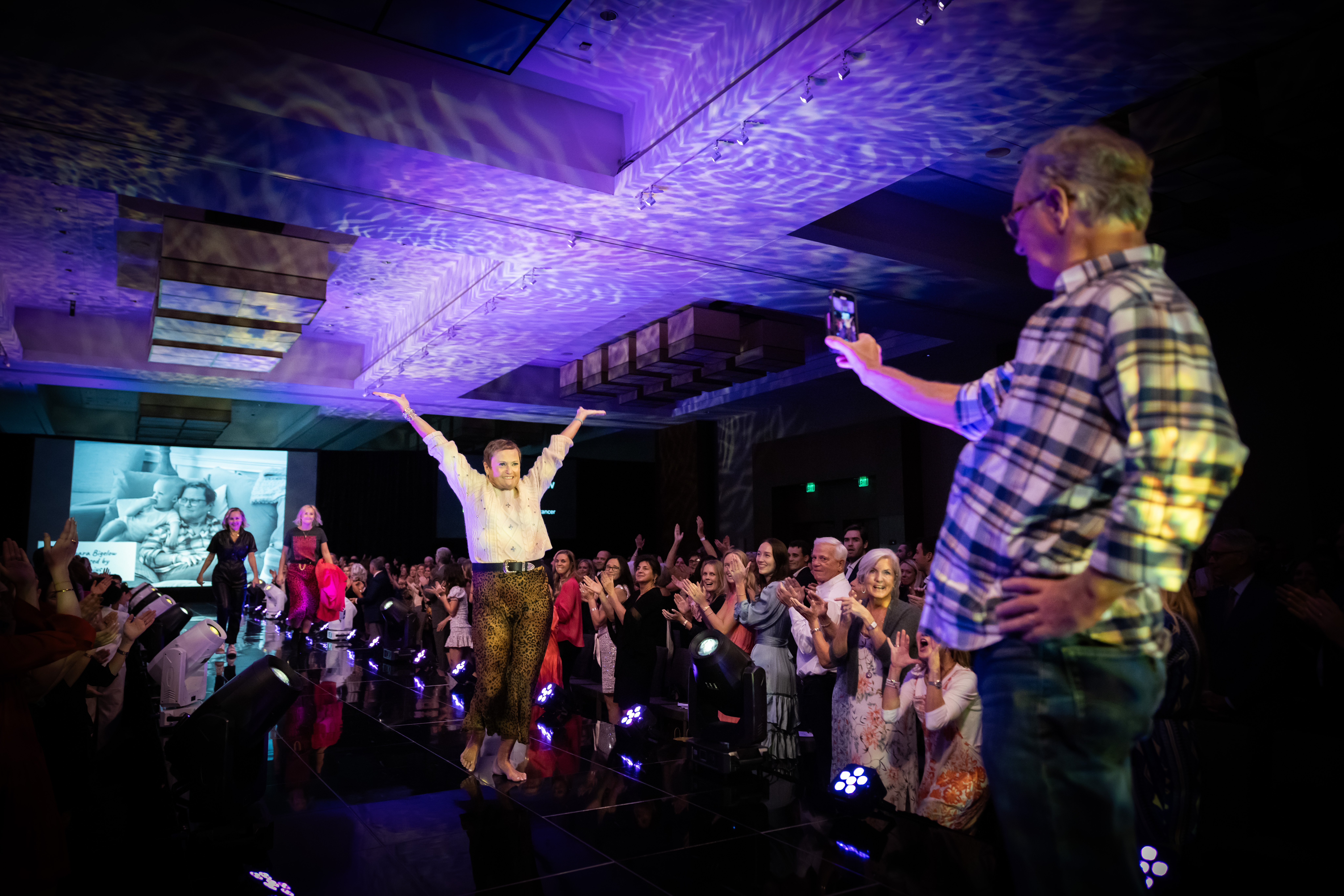
When Barbara walks in Runway’s 20th anniversary show, we will be celebrating 10 years with no evidence of disease, 11 years of living with metastatic breast cancer, and a woman whose presence has given hope to more people than she may ever fully know.
We will be celebrating her honesty.
Her humor.
Her advocacy.
Her grief.
Her joy.
And her reminder to breathe, find your people, and keep going.