
Asha Miller’s Story
20th Anniversary Boston Model, Completed Treatment
Where are you now in your breast cancer diagnosis?
Asha was 33 when she found the lump that led to her breast cancer diagnosis. She had just turned 34 when she was diagnosed. Now, as she prepares to turn 43, she is entering what she calls a big year of reflection.
Next year will mark Asha’s 10-year cancerversary, and she already knows she plans to celebrate it fully.
“I am going to celebrate so hard next year,” she says.
What has survivorship felt like for you?
For Asha, survivorship has not always felt easier than diagnosis.
“So many of us feel like survivorship has been harder than the actual diagnosis,” Asha says.
After treatment, so much changes. Your body changes. Your mind changes. Your relationship to yourself changes. And yet, many people are left feeling as if they are supposed to simply move forward.
Asha knows that feeling. She remembers looking at herself during treatment after a photo shoot, expecting to see one version of herself and instead feeling disconnected from the person in the pictures. Her hair was gone. Her skin had changed. Her face looked different from steroids. So many pieces of how she recognized herself had been altered by cancer.
“I will never forget that moment,” Asha says. “I just felt like, this is not me.”
For Asha, that moment was part of a much longer process of learning how to return to herself, not by becoming who she was before cancer, but by learning to love the body that had carried her through it.
How has vitiligo become part of your story?
After breast cancer, Asha was also diagnosed with vitiligo.
She never imagined that another diagnosis would become part of her survivorship. But doctors believe her vitiligo may be connected to the stress cancer placed on her body.
At this year’s New York Runway Show, Asha made a powerful decision. She chose not to cover her vitiligo.
She asked the makeup artist not to hide the spot on her face. She chose a sleeveless dress so the vitiligo under her arms would be visible. And when she lifted her arms on stage, she was showing another part of herself that she had decided no longer needed to be hidden.
“This is the first show that I’m showing my vitiligo,” Asha says.
That choice was huge.
Not because Asha does not have hard days with it. But because the breast cancer community has taught her something about showing up exactly as you are.
How did breast cancer help you face another diagnosis?
In the breast cancer community, Asha has been surrounded by women with one breast, two breasts, no breasts, scars, wigs, no wigs, hair, no hair, and bodies changed by treatment. She has watched women carry fans through hot flashes, show their scars, and choose courage in public.
That community helped her embrace her own body differently.
“We have learned to just be like, epic, whatever,” Asha says. “What am I gonna do?”
What do you want other women to know?
“We are so much stronger than we ever think possible,” she says. “We really are. We are so resilient.”
She also wants them to know that community matters.
“Community is so important,” Asha says. “The community is like none other.”
Asha wants them to know they are not alone.
Why does representation matter to you?
Asha is deeply intentional about representation.
As a Black and West Indian woman, she understands the power of being seen. She knows what it means for other Black women and women of color to see survivors standing on a runway, telling their stories, and showing their bodies with pride.
She has spoken openly about the need for brands, organizations, and fashion spaces to do better — not with excuses, but with action.
“We are a totally different generation of advocates,” Asha says.
That advocacy is part of why Asha’s presence on the Runway stage matters.
What has Runway meant to you and your family?
Asha’s first Runway experience was in New York, and it became something her family and friends watched from all over the world.
People tuned in from Trinidad, across the Caribbean, Canada, Europe, and beyond. Her children watched too.
At first, Asha’s children were nervous to walk with her. But after experiencing Runway, something shifted.
“It was such a special time,” Asha says. “I think it was something that unlocked in them to see all of these women and stories.”
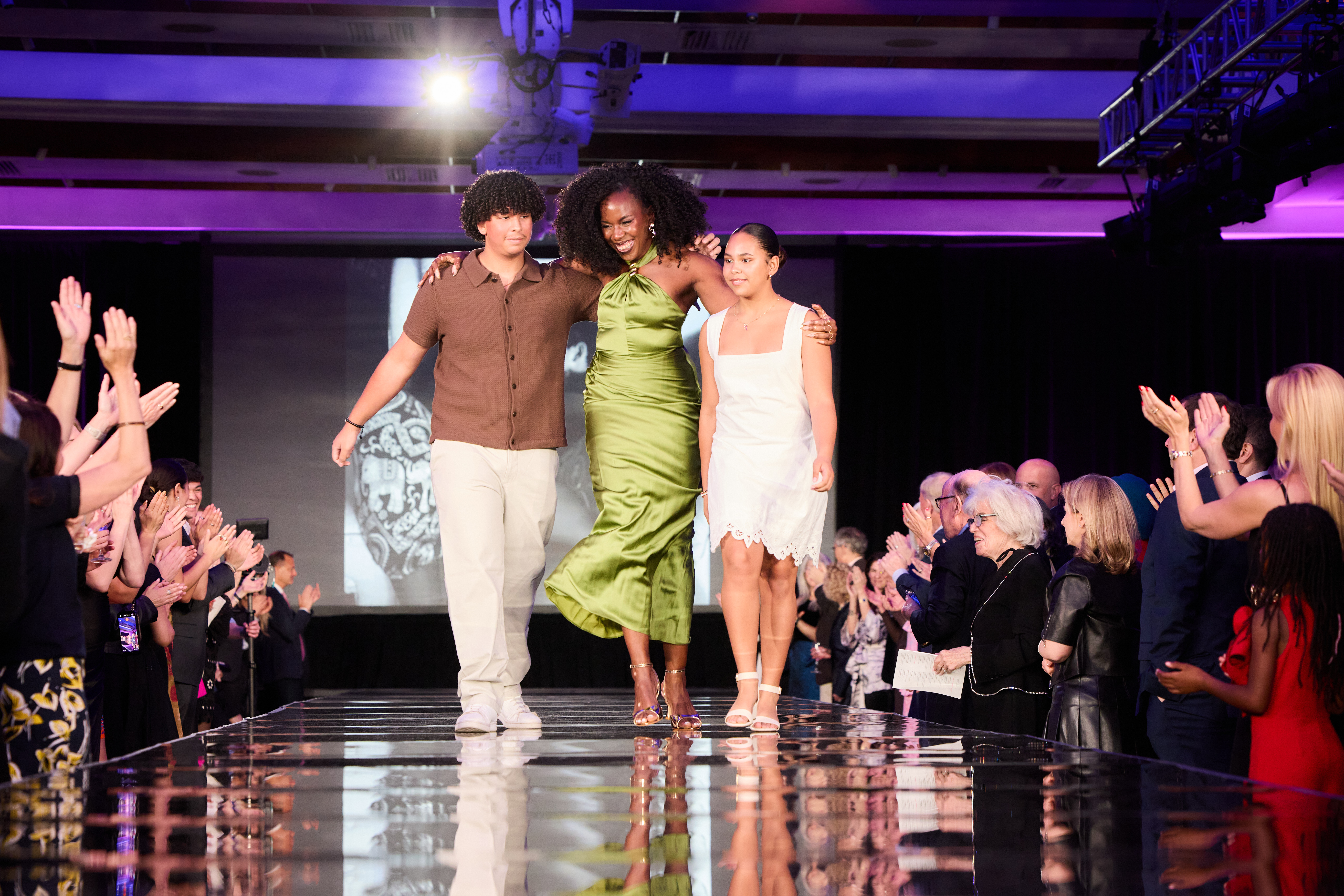
This year in Boston, her children said yes to walking with her again.
For Asha, that means everything.
What are you celebrating now?
Recently, during a photo shoot, Asha was asked what she wanted edited.
Her answer was simple.
“Nothing,” she said. “I want every flaw in there.”
Asha is celebrating her body as it is now.
As she steps onto the Boston Runway stage, we are honored to celebrate Asha’s strength, advocacy, beauty, representation, and the resilience she continues to offer to everyone watching.
“We are so much stronger than we ever think possible,” Asha says.