Angela LaFave’s Story
20th Anniversary Boston Model, Completed Treatment
How has breast cancer affected you?
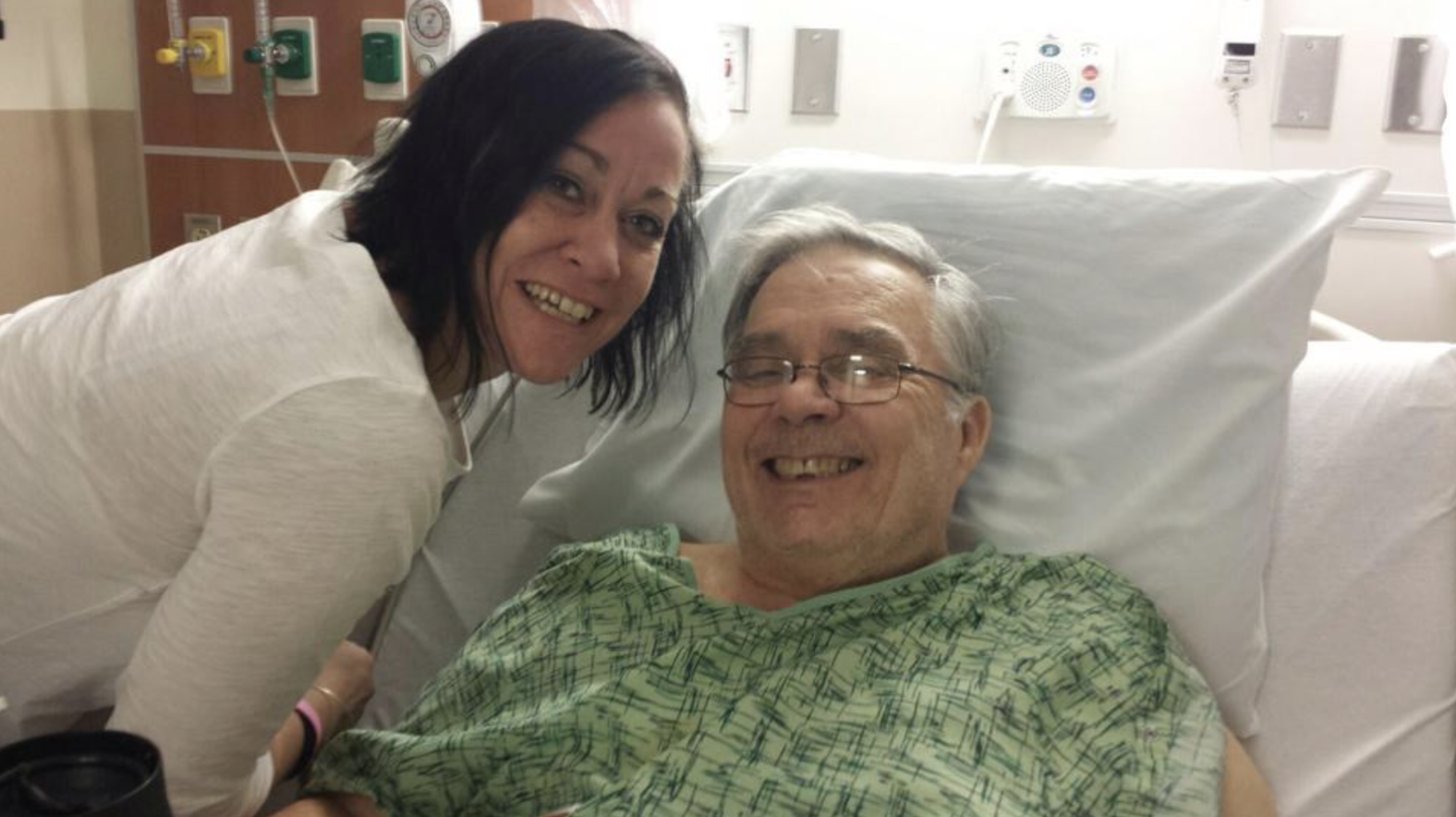
Angela LaFave’s first experience with breast cancer came through her father.
In 2015, her father was diagnosed with breast cancer. At first, he thought he had been shot by a BB gun.
“Dad, you would know you got shot by a BB gun,” Angela remembers telling him.
Eventually, he learned it was breast cancer. He had a mastectomy and made it through that diagnosis.
Years later, in 2020, Angela stood beside her father as leukemia took his last breath.
“That was really hard,” she says.
Then COVID hit.
That same year brought one difficult thing after another. Grief. Isolation. The end of a relationship Angela thought might become marriage. And then, in October 2020, Angela was diagnosed with breast cancer herself.
“It was the worst year,” Angela says.
When were you diagnosed?
Angela was diagnosed in October 2020.
Thankfully, her cancer was caught early. She had two lumpectomies and radiation. But because her diagnosis came during COVID, treatment was especially isolating.
“I had to go through all that during COVID time,” Angela says. “So it was kind of a lonely period.”
She went to treatment alone.
She rang the bell alone.
For Angela, walking out the door by herself after ringing the bell was one of the hardest parts of closing that chapter.
As a single, self-employed massage therapist, Angela also faced the reality that treatment would mean time away from work, during a year that was already financially and emotionally difficult for so many people.
Still, she kept going.
How did your community support you?
Even though Angela had to go through treatment alone inside the hospital, she was not alone in life.
Her friends and community showed up for her in ways she will never forget.
“Even though the journey itself was alone, going to treatments and stuff, I had the love around me,” Angela says.
Friends created “Running for Angela” to raise money for her. A local catering company, The Brussels, sent surprise food deliveries. Volunteers helped keep her horse ridden. One friend surprised her by paying a month of utility bills. Another covered her Xfinity service for several months.
“The love and support was so appreciated,” Angela says.
What did that support teach you?
Angela knows how much practical support matters.
When someone is facing cancer, even small things can become overwhelming: bills, food, work, transportation, animals, daily responsibilities, and the emotional weight of it all.
During COVID, when no one could sit beside her at treatment, Angela’s community found other ways to be there.
Those gestures did not erase the loneliness of treatment, but they reminded her that she was loved.
“They were there for me in many ways,” Angela says.
It helped Angela feel held during a time when so much of life felt uncertain.
How was your breast cancer found?
Angela’s breast cancer was found through imaging.
Because she has dense, fibrous breasts, her care team was watching closely. Her cancer was caught through a mammogram, followed by an MRI.
After treatment, Angela began having imaging every six months.
In 2023, doctors found something else, and Angela had another biopsy. Thankfully, it came back negative.
Then, just recently, Angela had another biopsy. This time, it was negative for cancer but positive for atypical lobular hyperplasia, or ALH. It is not cancer, but it can increase risk and needs to be watched closely.
For the next two years, Angela will have MRIs every six months.
It is not cancer right now, and Angela is thankful for that.
But she is honest about the uncertainty.
“It’s a what if,” she says.
How has breast cancer continued to affect you?
Angela sometimes feels guilty sharing her story because she knows other people have faced more difficult diagnoses or more aggressive treatment.
But she also knows that hearing the word cancer changes you.
“You still live with it every day once you hear the word cancer,” she says.
Even after treatment ends, the fear does not always disappear. Every scan, every biopsy, every new finding can bring back the uncertainty.
Angela has tried, at times, to close the door on that chapter.
“I try not to relive it.”
But she also lives with the reality of follow-up care every six months. And as more friends in her own community are diagnosed with breast cancer, she finds herself revisiting parts of her own experience.
It can be scary.
It can also be connecting.
How have you stayed connected to the breast cancer community?
Angela has long supported breast cancer causes.
Over the years, she has attended or participated in events including the Fit4aCause Triple Challenge, Ride for the Cure with Susan G. Komen, Challenge of the Americas, and the Pink Tie Gala.
Each event has given her another way to support the breast cancer community, honor those affected, and help raise awareness.
Now, she is excited to be part of Runway for Recovery.
Why does walking Runway feel meaningful?
For Angela, walking the Runway stage is a chance to honor her father, celebrate her own survivorship, and support a cause that deeply aligns with what she has lived.
It is also a chance to step outside her comfort zone.
This October, Angela will join survivors, those in treatment, metastatic models, caregivers, loved ones, and legacy models on the stage.
We can’t wait to cheer her on!